
PNW Timber Frame Construction: Why Douglas Fir Wins
Douglas Fir has been the backbone of Pacific Northwest timber framing for a century. Why it performs, what to weigh for your build, and how to specify it.
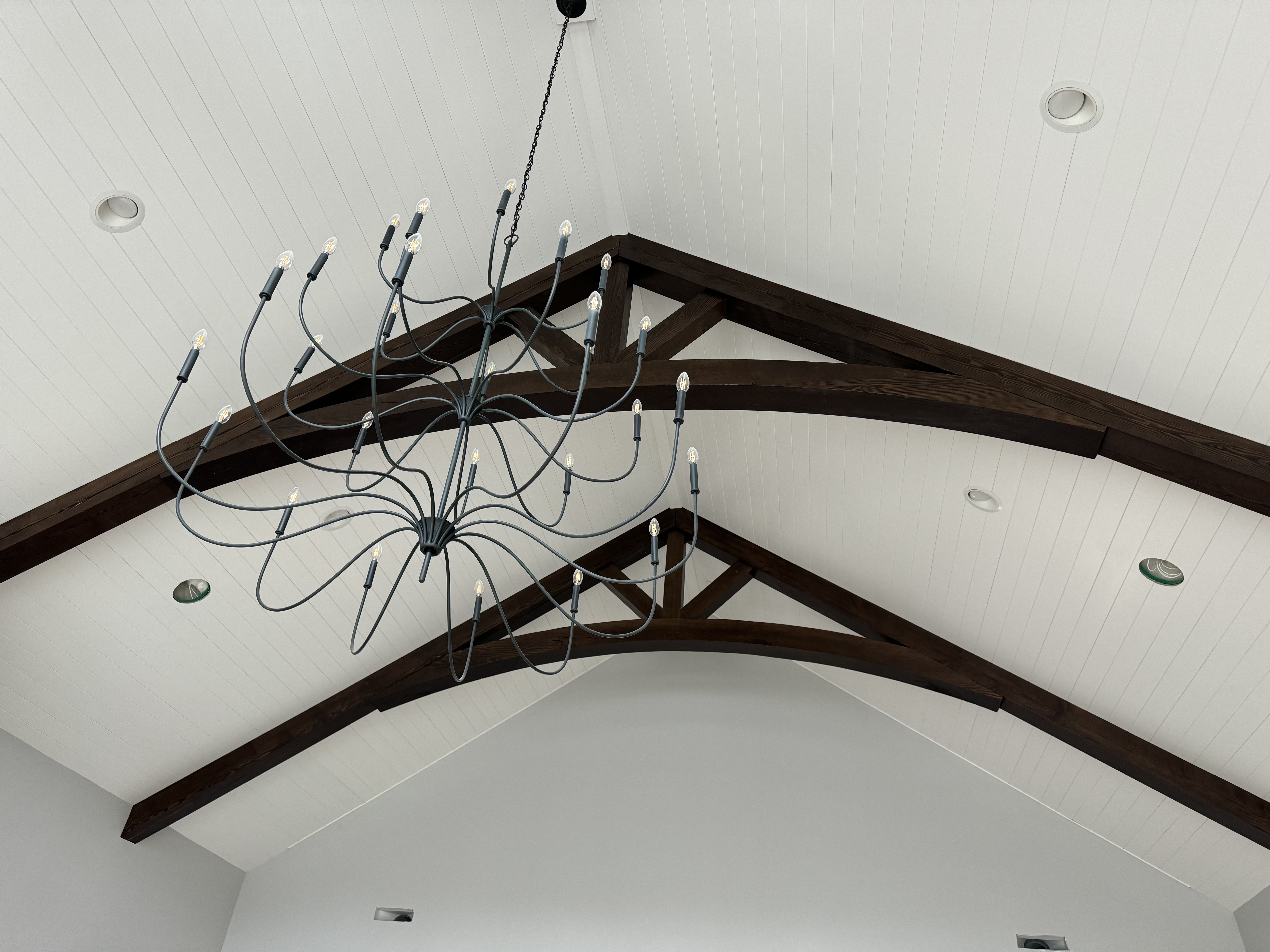
Timber frame construction has experienced a renaissance in the Pacific Northwest over the last two decades. New custom homes, restored historic structures, and commercial buildings are all rediscovering the appeal of exposed heavy timber framing. And in the PNW, the species of choice is almost always Douglas Fir.
There are good reasons for this. Here is why Douglas Fir works so well for timber framing in our region, what to consider when planning a build, and how to specify the timber to get a great result.
What Timber Frame Construction Actually Is
The term gets used loosely. Strictly, timber framing is a structural system where the building’s primary load-bearing structure is heavy timber posts and beams, joined with traditional joinery (mortise and tenon, dovetail, etc.) and exposed within the finished building.
This is different from:
Post and beam construction. Similar concept but typically uses metal connectors and fasteners instead of traditional joinery. Often called “post and beam” or “heavy timber” construction.
Stick frame construction. Standard residential framing with dimensional lumber (2x4, 2x6) and structural sheathing. Not timber framing.
Hybrid construction. Many modern “timber frame” projects use timber framing for visible structural elements and stick framing or steel for hidden portions. This is common and practical.
All of these can use Douglas Fir, and the species advantages apply across the board.
Why Douglas Fir for Timber Framing
Several properties make Douglas Fir ideal for this work:
Structural performance. Douglas Fir has some of the highest design values among commercial softwoods. For a given cross-section, a Douglas Fir post or beam carries more load than most alternatives. This means smaller cross-sections for given loads, or the ability to span longer distances.
Dimensional stability. Properly dried Douglas Fir holds its shape. This matters for timber framing because the joints are cut to precise tolerances. If the timber moves significantly after the joints are cut, you get gaps, twists, and stuck members.
Joinery characteristics. Douglas Fir cuts cleanly with timber framing tools. The grain is straight enough to chisel and cut without splintering. Mortises hold their shape. Tenons machine to clean dimensions.
Aesthetic. The orange-red heartwood and warm tones develop a rich patina over time. Many timber framers specifically choose Douglas Fir for the look as much as the performance.
Local availability. Douglas Fir is the dominant commercial species in the PNW. Supply is reliable, sizes up to 30x30 are routinely available, and pricing is competitive compared to imported or specialty species.
Considerations for Pacific Northwest Builds
A few PNW-specific factors that shape timber frame design here:
Seismic loads. The PNW is earthquake country. Cascadia subduction zone faults run through the region. Modern timber frame design accounts for this with engineered lateral resistance (shear walls, braced frames, hold-downs). Your structural engineer will design to current seismic code. Make sure they have current PNW seismic experience.
Wind loads. Coastal regions and exposed sites can see substantial wind. Pacific storms produce sustained winds that timber frame structures need to resist. Engineering for wind is straightforward but requires attention.
Snow loads. Mountain communities (Cascades, Olympics) see significant snow loads. Roof structures need to be designed for the local snow load, which can be substantial at elevation.
Moisture. The PNW has high humidity and substantial rainfall. Timber frame structures need proper drainage, eave overhangs, and protected detailing to prevent water exposure to structural elements.
Climate-driven movement. Wood expands and contracts with humidity changes. PNW humidity cycles between wet winters and dry summers, and timber moves accordingly. Joinery and detailing should accommodate this.
Specifying Douglas Fir for Timber Frame
When you order Douglas Fir for a timber frame build, several specifications affect the result:
Grade. Most timber frame builds use WCLIB No. 1 Structural. This provides excellent strength values while being economically reasonable. Select Structural is sometimes specified for visible primary members where appearance matters most. No. 2 is rarely used in visible timber frame work because grade defects (knots, slope of grain) are too prominent.
Old growth vs second growth. Both work structurally. Old growth gives tighter grain and finer aesthetic but costs significantly more. Most modern timber frame projects use second growth and look excellent. See our separate guide on old growth vs second growth Douglas Fir.
Free of Heart Center (FOH). Recommended for primary visible members because it reduces checking (surface cracking that can develop as the wood dries). FOH is available at 12x12 and 10x14 and smaller. For larger members, expect some checking; this is normal for heavy timber. See twist, splits, and checks in solid-sawn Douglas Fir for what falls within grade and what does not.
Moisture content at delivery. Standard rough cut Douglas Fir from us ships air-dried, typically 18 to 25 percent moisture content for larger sizes. The wood will continue drying after installation. This is normal and expected. Joinery should account for shrinkage.
Surface finish. Rough sawn is standard and is what most timber framers prefer. The texture takes finish well and shows tool marks deliberately. Surfaced (S4S, S2S) is available but less common for traditional timber framing.
Common Sizes for Residential Timber Frame
For a typical residential timber frame home in the PNW:
- Posts: 8x8 to 10x10 most commonly. Larger posts (12x12) for substantial loads or design preference.
- Beams: 8x10 to 10x14 most commonly. Sized to span.
- Rafters: 6x8 to 8x10.
- Ridge beams: 10x12 to 12x16 depending on span.
- Trusses: Various components, often 6x6 to 8x10 for individual members, occasionally larger for primary chords.
These are typical ranges. Specific dimensions come from your structural engineer based on your design.
Working with a Timber Framer
If you have not built timber frame before, work with an experienced timber framer. The species and material matter, but so does the craftsmanship. A skilled framer:
- Designs joinery that works with the wood movement and your loads
- Cuts the timbers with appropriate tolerances
- Coordinates raising with experienced crew and equipment
- Handles the detailing where timber meets walls, roofs, and finishes
The PNW has many excellent timber framers. We routinely supply material to local shops, and we can recommend contacts if you need help finding one.
Timing and Lead Times
A typical custom timber frame home order from us:
- Initial spec consultation: 1 to 2 weeks
- Detailed quote and order: 2 to 4 weeks lead time for standard sizes
- Larger or custom items: 4 to 8 weeks lead time
- Delivery and raising: coordinated with your timber framer’s schedule
Plan ahead. The timber framers we work with often have 6 to 18 month wait lists for their next available build slot. Material lead time is usually shorter than framer availability, so the framer’s schedule is typically the bottleneck.
Ready to Plan Your Build
If you are planning a timber frame project in the Pacific Northwest, we can supply the Douglas Fir from our mill in Arlington, Washington. Sizes from 6x6 to 30x30, lengths to 60 feet, WCLIB graded, ready for skilled timber frame work.
Request a project quote or explore our timber structures services.
Last updated September 14, 2026