Building an Equestrian Arena: Timber Specs and What to Budget
Planning a covered equestrian arena? Here's what timber you'll need, common sizes for different arena footprints, budget ranges, and how to plan your build.
A covered equestrian arena is one of the largest single timber purchases most owners ever make. It is also one of the highest-value investments for a serious equestrian operation: protection from weather, year-round riding, and a fixed asset that holds value.
If you are planning an arena build, here is what to expect in terms of timber specs, budget, and the overall planning process.
Arena Footprint Standards
The footprint determines almost everything. Standard sizes that come up most often:
60 by 120 feet. A solid working arena for one or two riders at a time. Suitable for dressage, jumping training, general schooling. The smallest size we typically see built as a covered structure.
80 by 200 feet. A larger working arena that comfortably accommodates more activity. Standard dimensions for many competition disciplines. This is one of the most common sizes we supply timber for.
100 by 220 feet. A full-size dressage arena (20 by 60 meters) with surrounding work space, or a competition jumping arena. Substantial structure.
120 by 240 feet or larger. Full-scale facility for commercial training, breeding operations, or large competition use. Major construction project.
Footprint determines column spacing, roof span, and total material requirement. The bigger the arena, the more important careful engineering becomes.
Structural Approach Options
A few approaches exist for covered arena construction:
Heavy timber post and beam with trusses. Traditional approach using vertical Douglas Fir posts, horizontal beams, and engineered timber trusses spanning the width. Beautiful, durable, traditional appearance. Premium budget.
Glulam (glued laminated) construction. Engineered laminated timber that can span longer distances than sawn timber. Allows clear span without intermediate posts. Higher engineering cost, more specialized fabrication, but very capable structurally.
Hybrid timber and steel. Steel columns supporting timber roof structure, or steel trusses with timber siding. More economical for very large spans, less traditional appearance.
Pole barn / post frame construction. Pressure-treated wood poles supporting wood trusses. Lower cost but less impressive appearance and shorter lifespan than full heavy timber.
For most equestrian clients who care about the look as well as the function, heavy timber post and beam is the preferred approach.
Typical Timber Specifications
For a heavy timber arena in the 80 by 200 foot range, typical material breakdown:
Vertical posts. 12x12 Douglas Fir posts at 16 to 20 foot spacing along the long walls. Heights typically 16 to 20 feet to give adequate rider clearance under truss bottom chords. For an 80 by 200 arena, you typically need 26 to 30 posts.
Tie beams. Horizontal 10x12 or 12x14 beams running along the tops of the posts, tying the structure together and supporting truss bearing.
Trusses. Engineered timber trusses spanning 80 feet. Typically built from 8x10 or larger chord members with smaller diagonals. Spaced 16 to 20 feet on center along the length.
Ridge beam. Where trusses meet at the apex, a substantial ridge member ties the top.
Lateral bracing. Diagonal braces between posts and beams to resist lateral loads.
Roof structure. Purlins running between trusses, supporting metal roofing.
Total timber requirement for an 80 by 200 arena: typically 25,000 to 45,000 board feet of Douglas Fir depending on truss design and structural approach.
Budget Ranges
Pricing varies significantly with design, location, and finish quality, but rough ranges for the timber portion of a heavy timber arena:
60 by 120 arena: 12,000 to 22,000 BF, approximately $50,000 to $90,000 in timber at current mill-direct pricing.
80 by 200 arena: 25,000 to 45,000 BF, approximately $100,000 to $180,000 in timber at current mill-direct pricing.
100 by 220 arena: 35,000 to 65,000 BF, approximately $140,000 to $260,000 in timber.
These are timber-only estimates and assume mill-direct pricing at truckload rates. The total arena project cost (timber, foundations, roofing, doors, lighting, footing) typically runs 4 to 8 times the timber cost. A full 80 by 200 covered arena, professionally built, runs anywhere from $400,000 to $1,200,000 depending on finish level, location, and complexity.
Foundation and Site Work
The timber sits on engineered footings. Common approaches:
Concrete piers with post bases. Concrete piers extending below frost depth, with engineered post base hardware holding the timber posts above ground. Keeps the wood out of moisture exposure.
Concrete grade beams. Continuous concrete beams supporting posts, often combined with stem walls for the lower portion of the building enclosure.
Spread footings. Larger concrete footings for heavily loaded posts, especially at corners and gable ends.
Footings need to be engineered for the soil conditions at your site. A geotechnical investigation may be needed for larger arenas or marginal sites.
Roofing and Enclosure
The timber frame is the structural skeleton. On top of it, you typically have:
Metal roofing. Standing seam or corrugated metal panels on purlins. The most common arena roofing material. Durable, sheds snow well, reasonable cost.
Skylights or translucent panels. Many arenas incorporate skylights to bring natural light into the riding space. Saves daytime electrical lighting and improves the riding experience.
Siding (optional). Some arenas are fully enclosed; others are open or partially open. Fully enclosed gives weather protection but requires ventilation engineering to avoid moisture buildup. Open arenas are simpler and cheaper but offer less weather protection.
Doors. Sliding doors at gable ends are standard. Sized for riders to enter mounted (typically 12 to 14 feet wide, 10 to 12 feet tall).
Footing
The riding surface (footing) is its own subject and is independent of the timber structure. Common footings:
- Sand-fiber blends
- Engineered footing products
- Combination footings with base, sand, and fiber additives
Plan footing as a separate budget item. Quality footing for a competition-grade arena can run $20,000 to $80,000 just for the footing material.
Timing the Project
Realistic timeline for an arena build from initial planning to first ride:
- Site planning and engineering: 2 to 6 months. Includes site selection, soil investigation, structural engineering, permitting.
- Timber order: 6 to 12 weeks lead time for the full timber package.
- Foundation work: 3 to 6 weeks once permits are issued.
- Timber frame raising: 2 to 6 weeks depending on size and crew.
- Roofing and enclosure: 2 to 4 weeks.
- Footing installation: 1 to 3 weeks.
Total project timeline: 8 to 18 months from initial planning to a working arena.
Working with Us
We have supplied timber for equestrian arenas across the Pacific Northwest and beyond. Our role in your project:
- Quote your timber package based on your engineer’s spec
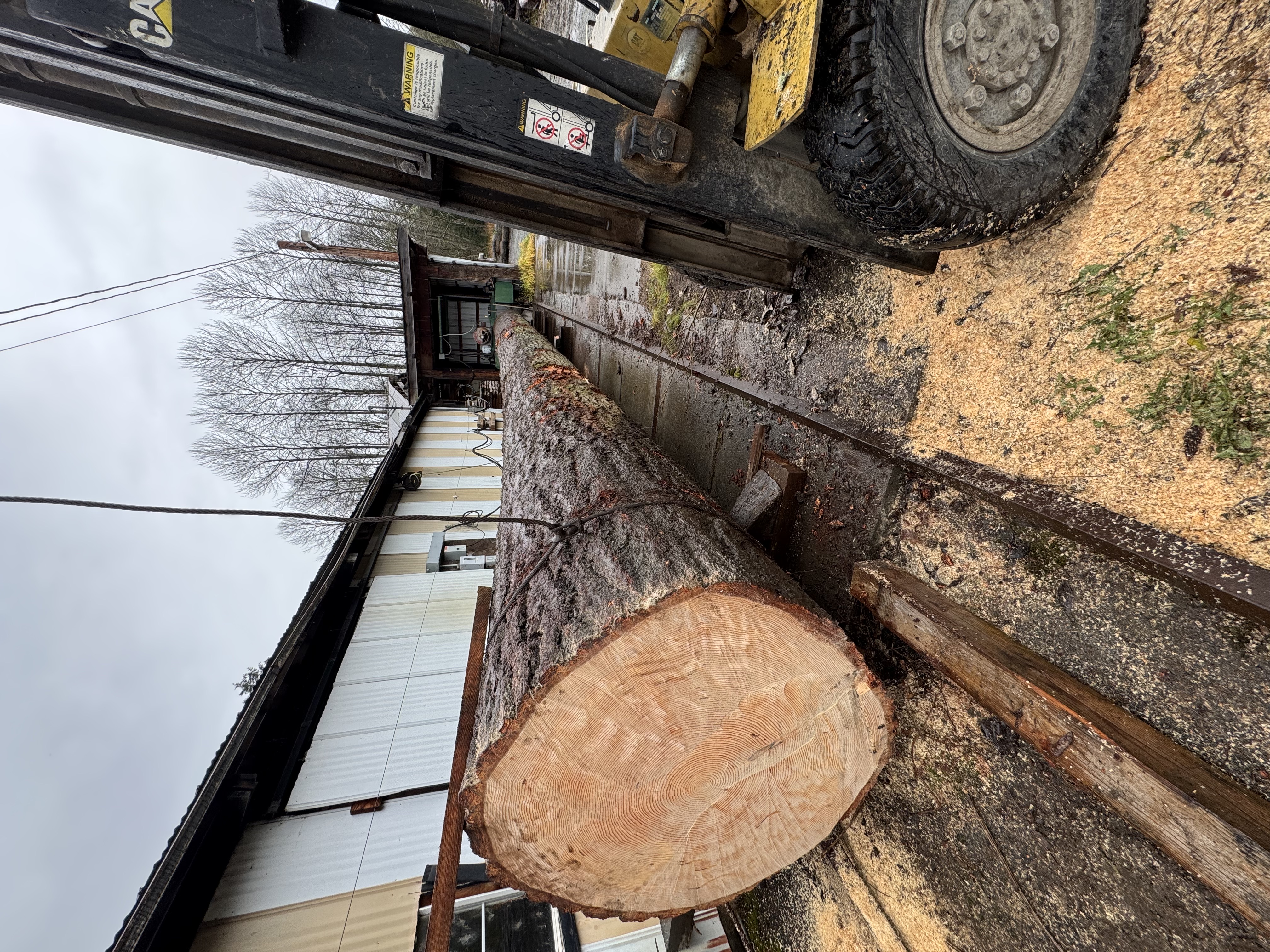
- Mill the Douglas Fir to your dimensions
- Coordinate delivery to your site (we ship throughout the US)
- Provide written quotes valid for 30 days, with terms suitable for projects of this scale
We do not design arenas or do the construction. You will need a structural engineer (typically with equestrian or large-span experience), a contractor familiar with timber frame work, and ideally an equestrian designer if this is a competition facility.
For more detail, see the timber we supply for horse facilities, or go straight to how arena width sets the clear span if you are already sizing members. To get a timber quote for your arena, request an estimate and include the arena footprint, structural approach, and your engineer’s contact information.