How to Order Custom Heavy Timber: A Step-by-Step Guide
The full process for ordering custom Douglas Fir timbers, from spec to delivery. What to send, what to expect, and the common mistakes that delay projects.
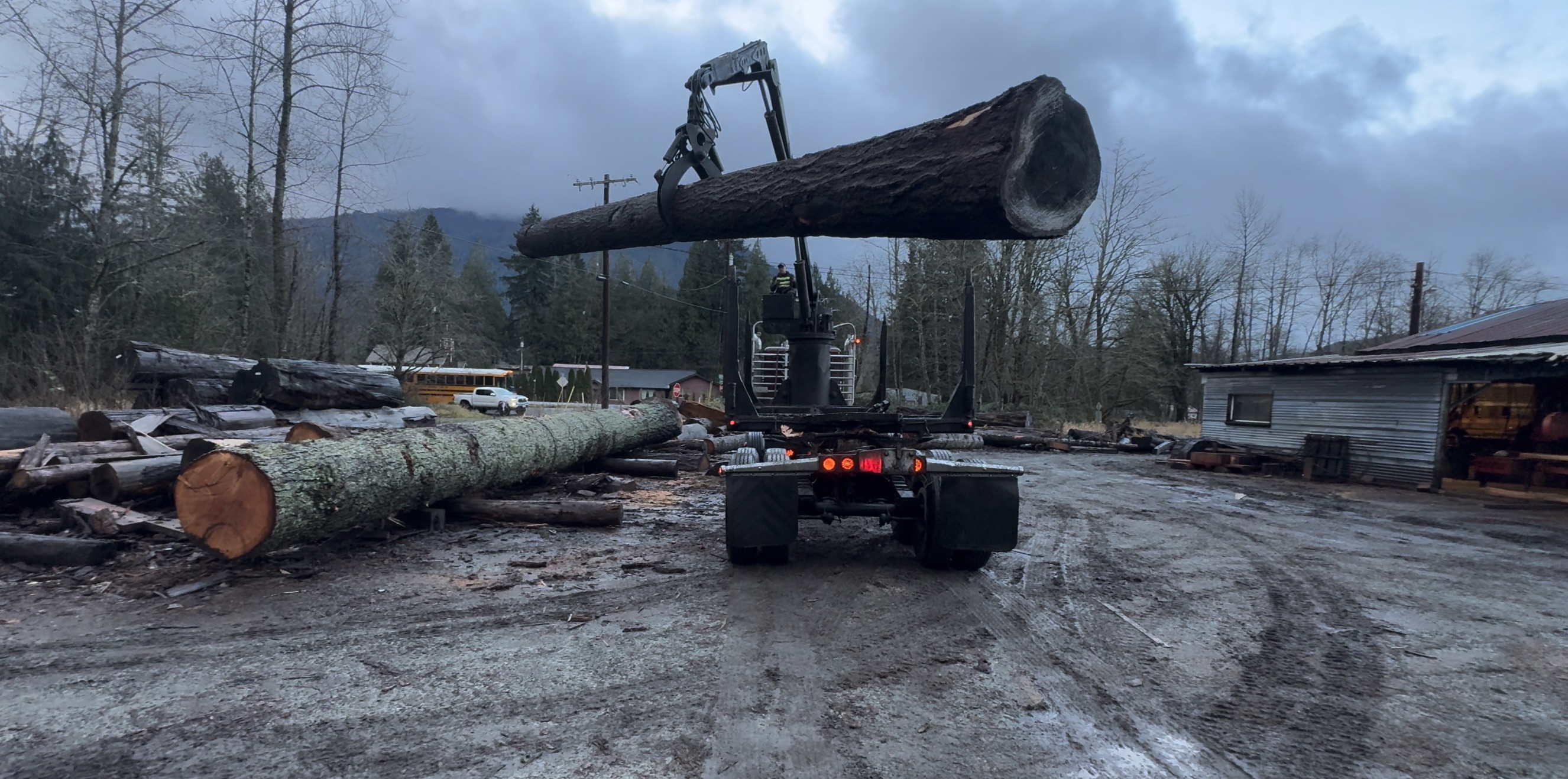
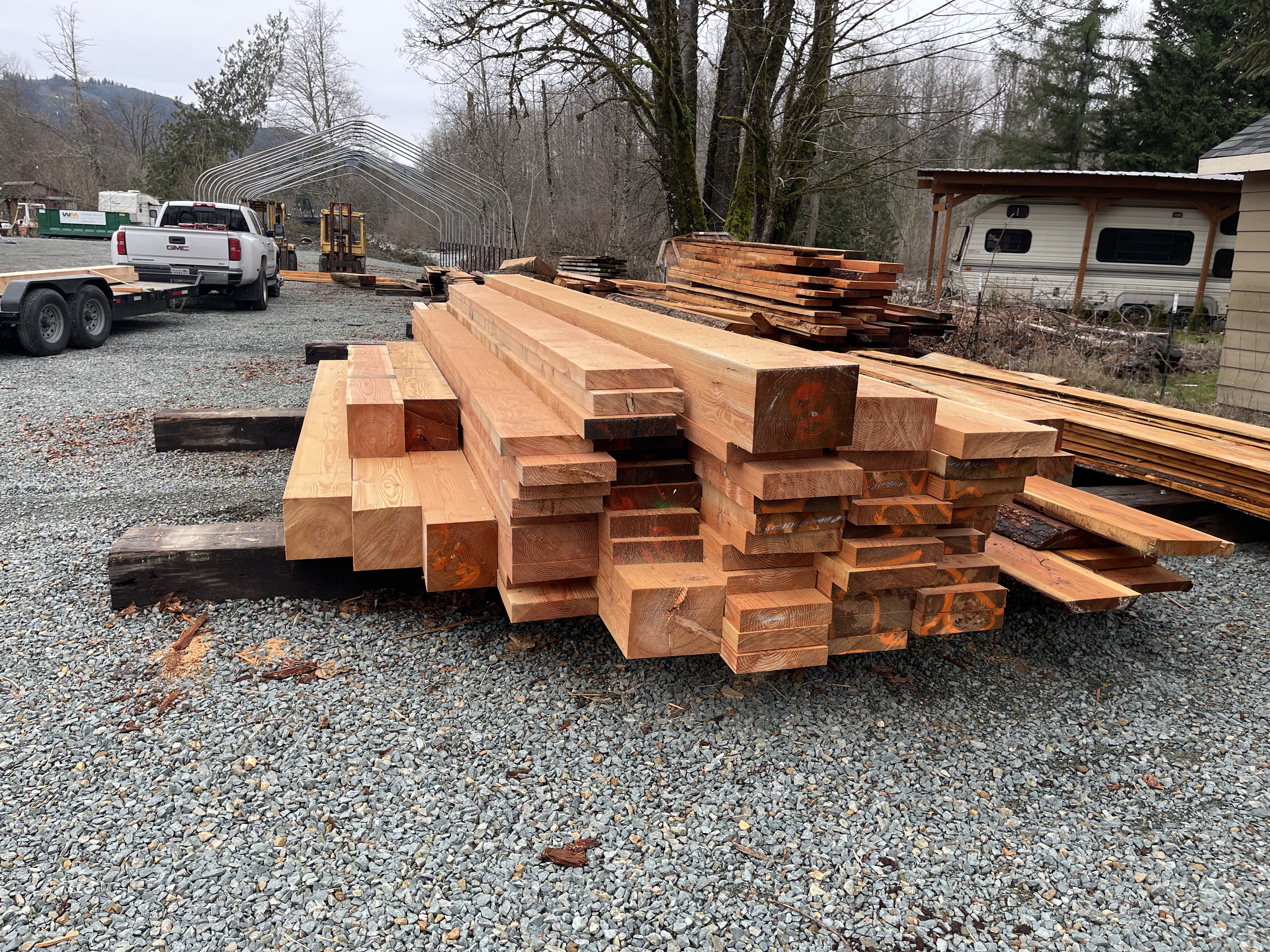
If you have never ordered custom heavy timber before, the process can feel opaque. Unlike picking up dimensional lumber at a big box store, custom timber involves spec’ing exact dimensions, choosing grades, coordinating delivery, and sometimes waiting for the mill to cut to order.
Here is how it actually works, step by step, so you can plan your project with confidence.
Step 1: Define Your Specifications
Before you contact the mill, get your specs as tight as possible. The more detail you provide upfront, the more accurate your quote will be.
Dimensions. What size timbers do you need? Standard sizes range from 6x6 up to 30x30 for very heavy commercial work. Be specific: a 12x12 is not the same as a 12x14, since the second number is height when oriented vertically. If your structural engineer specified the dimensions, send the exact engineered call out.
Lengths. What length does each piece need to be? Standard lengths run 8 to 20 feet. Longer pieces from 21 to 60 feet are custom-milled, carry a length surcharge, and have logistical requirements we will get to.
Quantity. How many pieces of each dimension and length?
Grade. What grade does your engineer require? Most heavy timber projects use WCLIB No. 1 Structural, which is our standard grade. Higher stakes engineered work may require Select Structural.
Species. Douglas Fir is our standard. Western Red Cedar is available at market rate. Other species are quote by quote.
Special requirements. Free of Heart Center (FOH)? Specific moisture content? Kiln dried? Surfaced or rough sawn? Any of these change the price and lead time. Before you spec kiln drying on a large section, read why large timbers are not kiln-dried.
If you do not have all of this nailed down, that is fine. We can help you spec it. But the more you can give us upfront, the faster we can quote.
Step 2: Request a Written Quote
Send your specs through our estimate request form or email shawn@washingtontimbercompany.com directly. Include:
- Your timber list with dimensions, lengths, quantities, and grade
- Project location for delivery
- Project timeline, meaning when you need delivery
- Any special requirements
- Contact info for follow up questions
We respond within one business day, usually faster. Our quote will include:
- Itemized pricing per dimension and length
- Total project cost, timber only
- Freight estimate to your destination
- Lead time estimate
- Quote validity, 30 days standard
- Payment terms, 50 percent deposit with balance on completion
Verbal quotes can happen over the phone for ballpark planning, but only written quotes are binding. Always get the written quote before making project decisions.
Step 3: Review and Refine
Once you have the written quote, this is the time to ask questions and refine your order. Common things to revisit:
Crossing the volume threshold. Orders of 4,000 BF or more drop to Volume pricing at $3.60 per board foot base, instead of the $4.60 Standard rate. If you are close to that threshold, adding a few more pieces can save you money on the whole order, because the lower rate applies to the entire quantity rather than only the pieces above the line. Worth checking every time.
Dimensional alternatives. Sometimes a slightly different dimension is significantly cheaper or has better availability. We will flag this if relevant.
Length splices. If you need a 30 foot length but a 20 foot piece plus a properly engineered splice will do, that is sometimes a better path. Discuss with your engineer.
Grade flexibility. If your engineer has flexibility between grades, we can quote both and let you compare.
Delivery timing. Lead times typically run 2 to 4 weeks. Very large or complex packages take longer and we will say so in the quote. If your timeline is tight, tell us early. If it has flexibility, we may be able to optimize.
Step 4: Confirm and Deposit
When you are ready to move forward, confirm the order in writing and send the 50 percent deposit. This locks pricing, schedules your timber on our production calendar, and triggers any necessary log sourcing.
Deposits are typically by ACH or wire transfer. We do not accept personal card payments over $5,000. For commercial accounts, terms are sometimes negotiable.
Once your deposit is received, your order moves from quote to production.
Step 5: Production
This is where the mill does its work. The timeline varies based on what you ordered:
Standard sizes and lengths. 2 to 4 weeks. We may have suitable material on hand and just need to cut and grade it.
Custom or oversized. 2 to 4 weeks. We may need to source specific logs or schedule mill time for non standard work.
Very large packages or specialty species. Longer lead times, communicated upfront in the quote. A full equestrian arena package or a run of 30x30 timbers depends on log availability and is quoted with its own schedule.
During production we can update you on progress. For commercial projects where timing is critical, we can schedule check ins or photos as work progresses.
Step 6: Delivery
When your timber is ready, we coordinate delivery. Options:
Local delivery in the Pacific Northwest. We deliver on our own trucks within the region. Smaller orders can sometimes be combined with other deliveries to save freight cost.
Long haul freight. For deliveries outside the immediate region, we coordinate with freight carriers. The quote will include an estimated freight cost, finalized closer to delivery.
Customer pickup. You are welcome to pick up at our Arlington, WA mill by appointment. This is sometimes a good option for nearby builders or for orders large enough to justify a flatbed.
International export. We ship internationally regularly. Documentation, port handling, and ocean freight are handled separately, with longer lead times.
Final balance is due on completion, typically at delivery. After payment, the timber is yours and the order is complete.
Common Mistakes to Avoid
A few things that delay orders or cause budget surprises:
Underspecifying the order. Vague specs such as “a few 12x12 beams” delay quotes and lead to corrections later. Be specific.
Not confirming with the engineer. Dimensions, lengths, and grades should come from your structural engineer, not be guessed at. We can help you understand options, but the engineering call is theirs.
Ignoring the volume threshold. If your list lands just under 4,000 board feet, you may be paying the Standard rate on the whole order when a small addition would drop everything to the Volume rate. Check before you confirm.
Waiting until the last minute. Lead times are real. Plan ahead, especially for oversized work where we may need to source specific logs.
Forgetting about freight. Freight on heavy timber can be substantial, especially over long distances or with oversized loads requiring permits. Budget for it.
Skipping the written quote. Verbal pricing is for planning, not commitments. Always get it in writing.
Ready to Quote Your Project
Have a timber list ready? Send it through and we will turn around a written quote within one business day. Working from Arlington, Washington, we mill Douglas Fir in sizes from 6x6 to 30x30 and ship across the country and internationally.
Request your estimate or use the interactive calculator for ballpark planning first.
Last updated September 14, 2026