Application
Equestrian Timber
The timber behind arenas, barns, stalls and shelters. Milled to the sections horse facilities actually call for, and shipped from Arlington.
What the Work Demands
Horse Buildings Are a Span Problem
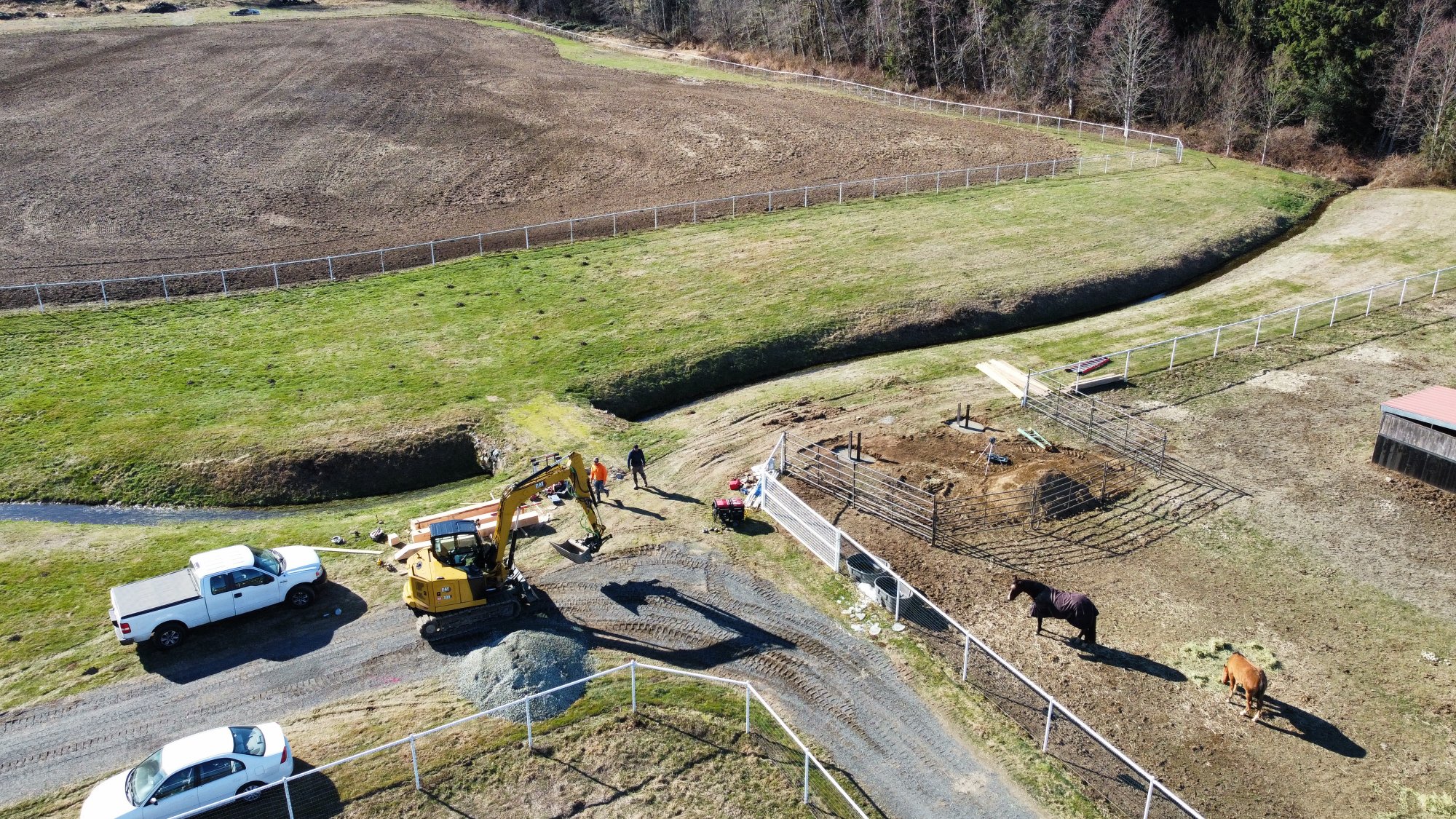
Almost every structure on a horse property is shaped by one constraint. You cannot put a post where a horse needs to travel. That rules out the interior columns a builder would otherwise use to break up a roof, and it pushes the whole load into fewer, larger members running further.
A 70 by 160 arena is not a big building by commercial standards. It becomes a demanding one the moment you say nothing may stand inside it. The same logic applies at smaller scale to a stall block that needs a clear aisle, and to a run-in that has to stay open across its full front.
That is why equestrian work turns up at a mill rather than a lumber yard. The sections are larger than stock, the lengths are longer than a truck of dimensional lumber carries, and the species has to have published design values an engineer will accept.
We mill Coast Douglas Fir from 6x6 up to 30x30, in lengths to 60 ft. Both of those numbers matter here more than on most jobs, and the second one matters more than people expect.
By Structure
Four Different Timber Problems
Horse properties get discussed as one category, but the structures on them make quite different demands. What follows is how each one tends to shape the order.
Covered and Open Arenas
The largest timber on any horse property. An arena roof has to cross the riding surface without a post in the middle of it, which makes clear span the single factor driving every section size on the job.
Riding arena timber →Covered Arenas Specifically
A roof turns a fenced surface into a permitted, engineered building. Snow load, clearance and bay spacing start driving the order, and the comparison against a steel package becomes a real question.
Covered arena timber →Barns and Stall Blocks
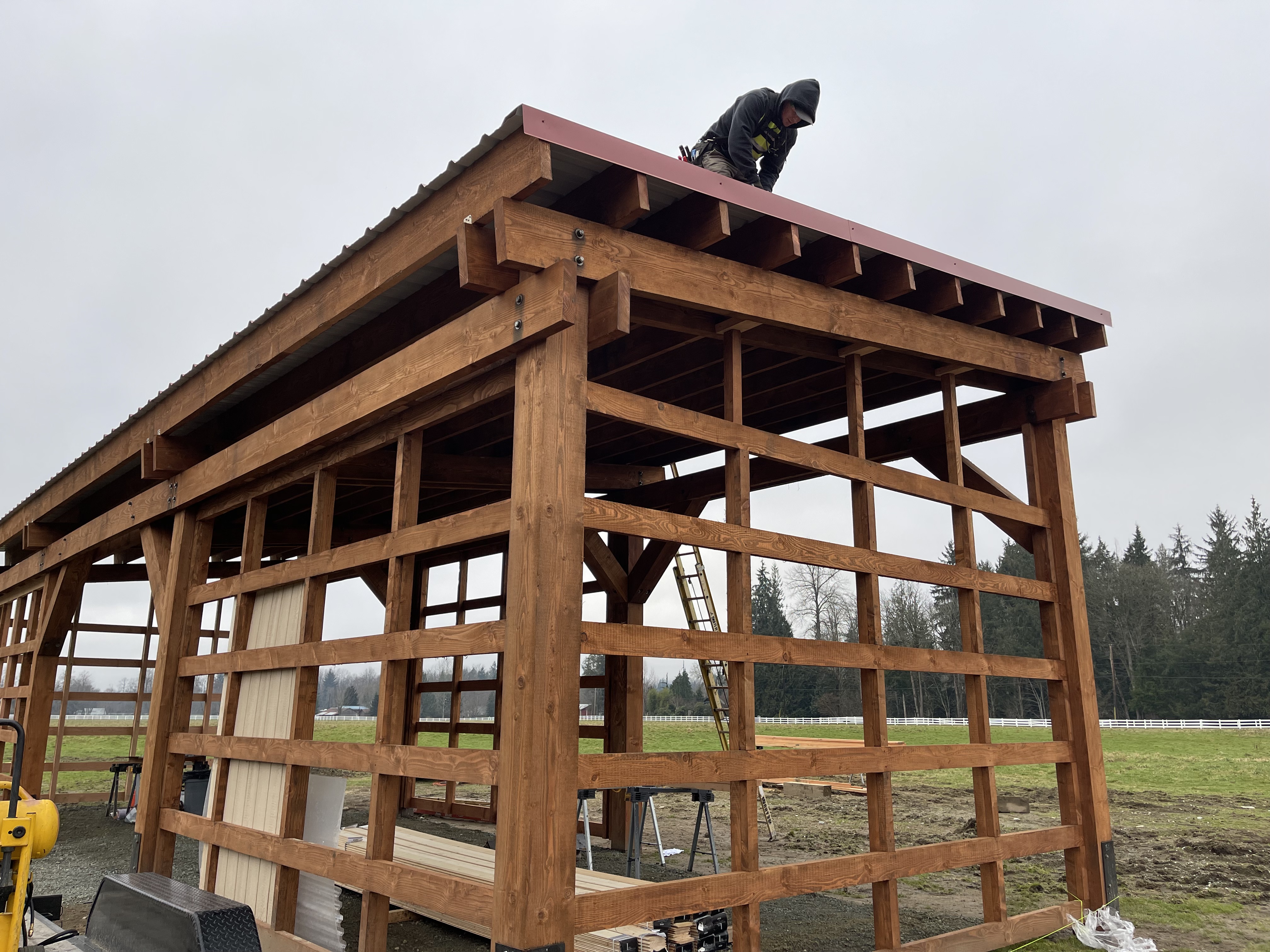
Post-and-beam barns carry a different load case than an arena. Shorter spans, more posts, and a roof that often supports a hay loft. Sections are smaller but the count is higher.
Run-In Shelters and Loafing Sheds
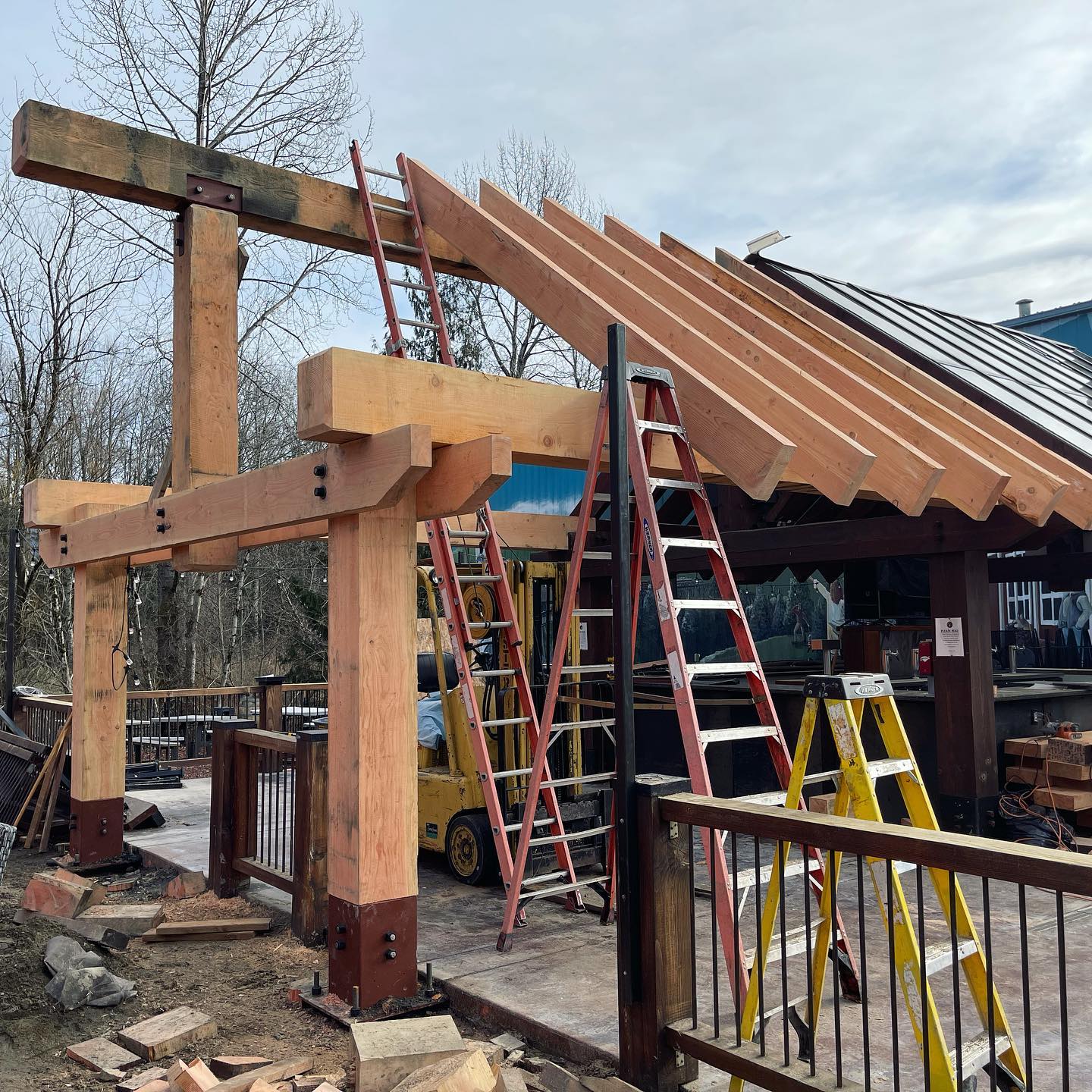
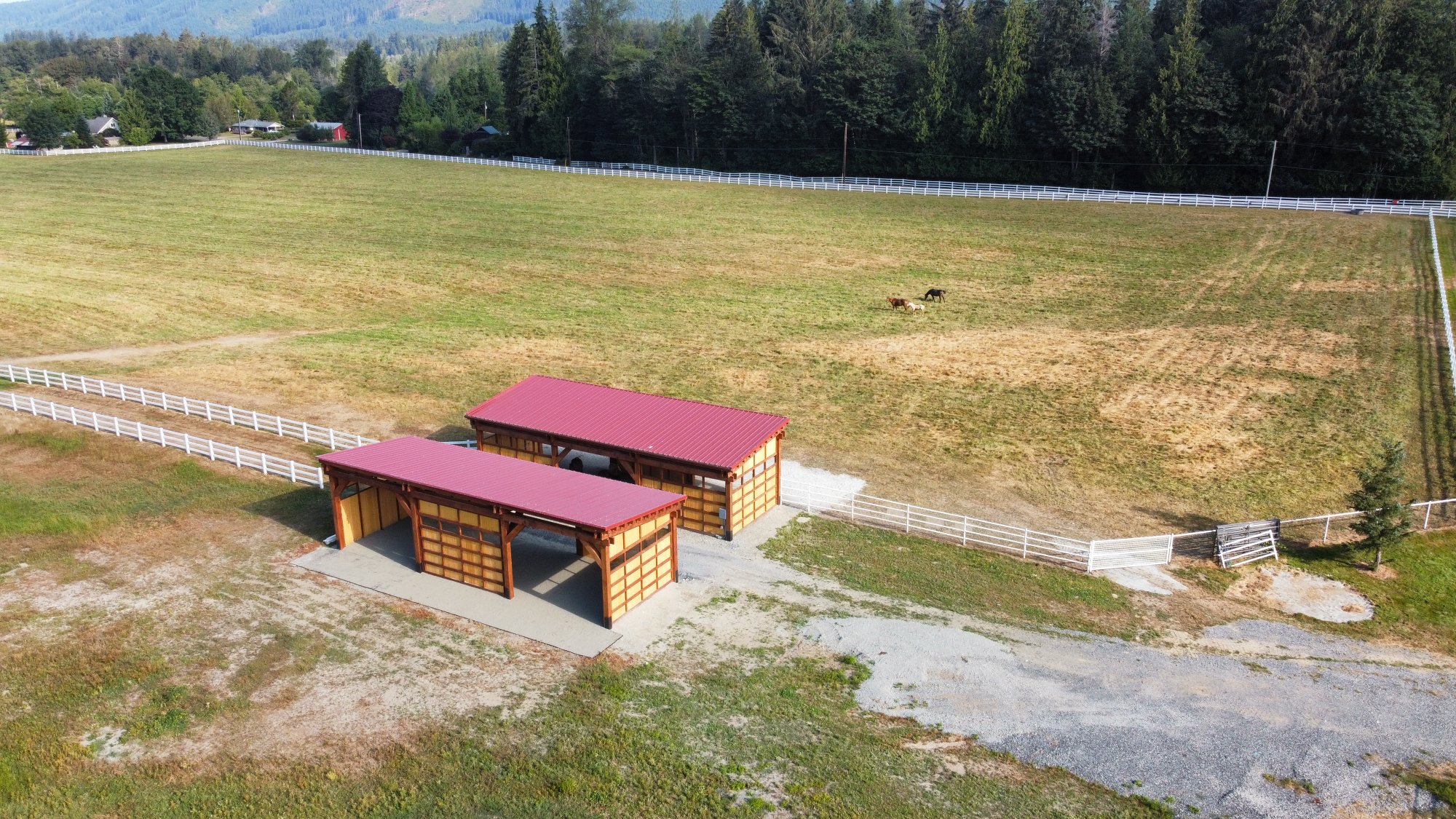
Small footprint, open front, and almost always exposed timber. These are the structures where appearance matters most relative to the amount of wood involved.
Entry Gates and Property Features
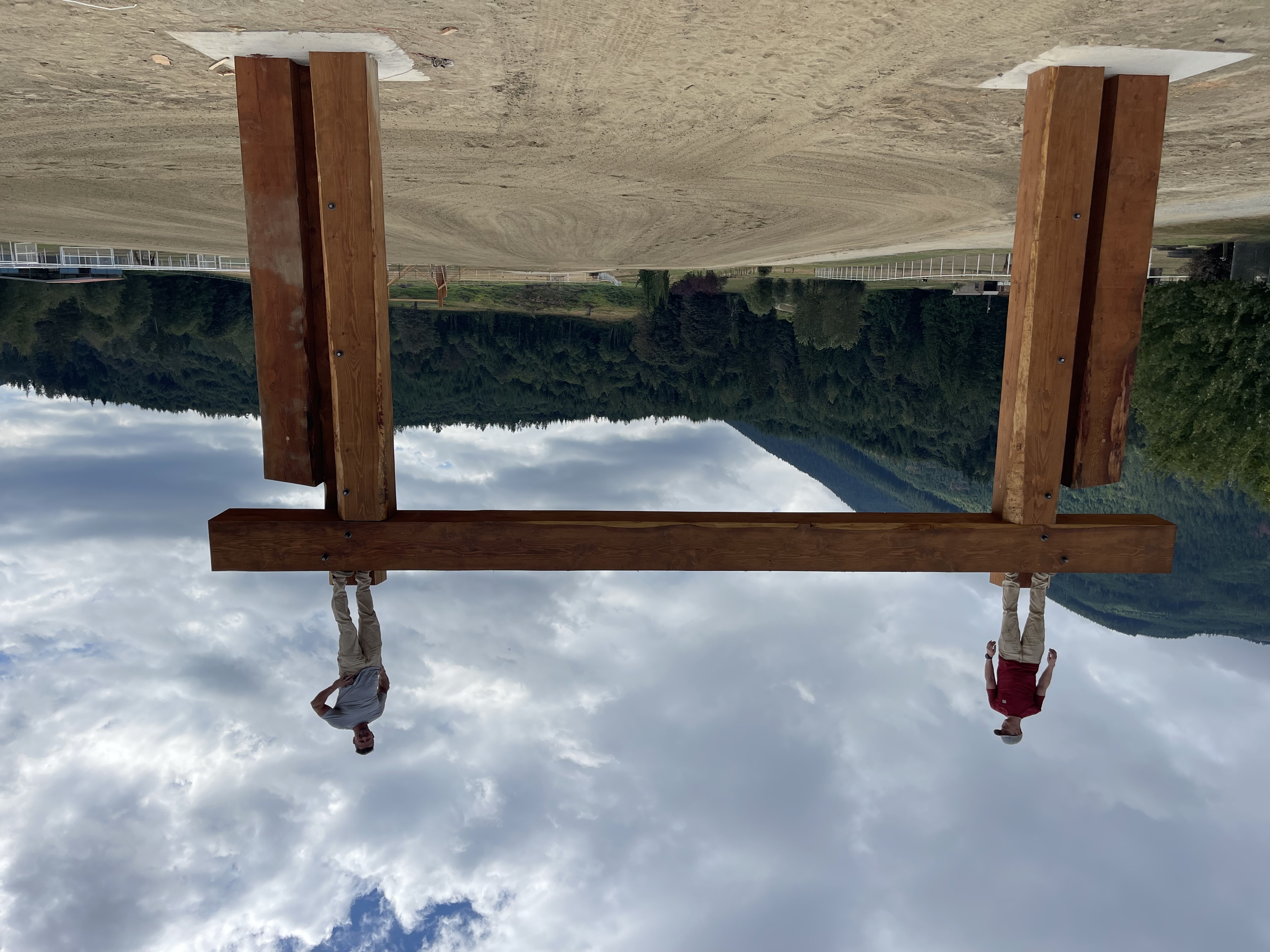
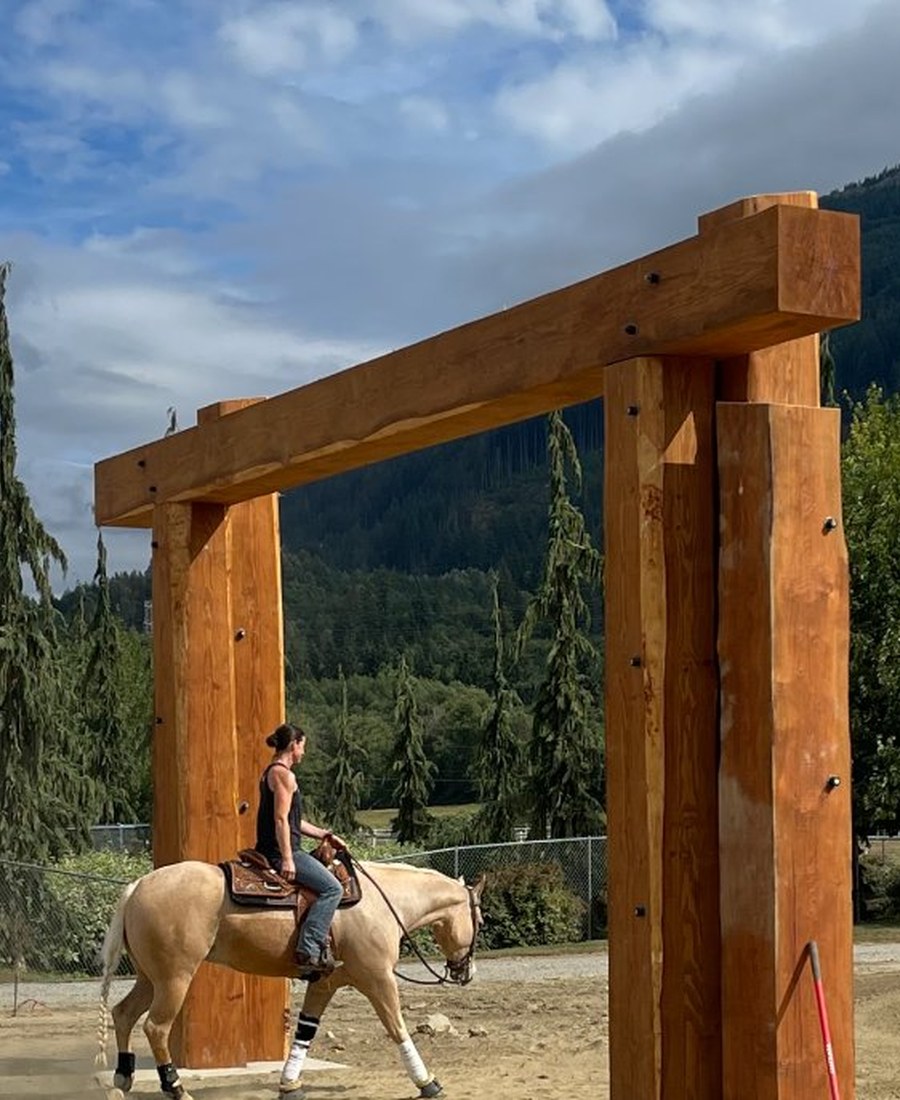
Monumental arch entries and gate posts. Short members in large sections, nearly always visible, which puts the emphasis on face quality and heart center placement rather than on span.
Before You Order
Two Things That Catch People Out
Douglas Fir does not go in the ground
Douglas Fir is not naturally rot resistant. The heartwood has some resistance, but in sustained ground contact it will not last, and no amount of section size changes that. If a drawing shows our timber buried, the drawing needs revising before the order does.
The normal answer on horse properties is a pier or a concrete footing with a standoff bracket, so the post starts above grade and stays dry. That is better practice than a buried post regardless of species, because it lets you replace a column decades from now without touching the roof. Where something genuinely must be buried, that member should be pressure treated material, which is not what we mill. We would rather tell you that now than ship you a problem.
Green timber moves, and the frame has to expect it
We ship green. Large sections are not kiln dried, because a 16x16 cannot be dried through without destroying it, so every mill supplying timber at this scale is shipping green whether or not they say so. Freshly cut Douglas Fir sits around 40 to 60 percent moisture content and comes down toward 12 to 15 percent in service over a period of years.
As it goes it will check along the face and shrink across the grain, roughly 1 to 2 percent from green to in-service equilibrium. Checking is a surface characteristic rather than a structural defect, and on an arena nobody is looking at it from three feet away. What matters is that the connection detailing allows for the movement instead of fighting it. A competent timber framer designs for this as a matter of course. It is worth confirming yours has.
Getting a Number
What to Send Us
We can quote from a cut list in minutes. Without one, the useful starting point is the footprint and what the structure has to do.
A cut list is the fastest route: sizes, lengths and quantities, and we will come back with a price and availability. If you are earlier than that, send the arena or barn footprint, whether it is covered, the clear span you need, and your location for freight. If an engineer has already stamped sizes, send those, and we will tell you honestly whether we can cut them and what the lengths will cost.
Our published rate is $4.60 per board foot, dropping to $3.60 at 4,000 board feet and up, before size and length surcharges. Arena packages frequently clear the volume break on their own, which is worth knowing before you compare quotes. There is a full worked example of the arithmetic on what arena timber costs, the rate card sits on our pricing page, you can run numbers yourself with the load calculator, and sections and design values are on our timber specifications.
Riding Arena Timber in Detail