Douglas Fir vs Western Red Cedar: Rot Resistance & Cost
Douglas Fir is not naturally rot resistant. Western Red Cedar is. Compare decay resistance, strength, cost per board foot and the best uses for each species.
The Pacific Northwest grows two iconic timber species, and choosing between them confuses a lot of buyers. Douglas Fir and Western Red Cedar both grow native to the region, both have long histories in PNW construction, and both are excellent woods. But they perform very differently, and using the wrong one for your application costs you money or performance or both.
Here is the practical comparison, with recommendations for when to choose each.
Quick Summary
If you need to skim, here is the short version:
- Choose Douglas Fir when you need structural strength, dimensional stability, and competitive pricing for heavy framing, posts, beams, and most structural applications.
- Choose Western Red Cedar when you need natural rot resistance, an aromatic and beautiful wood for exposed exterior use, siding, or applications where the cedar look and feel matters.
Read on for why.
Douglas Fir: The Structural Workhorse
Douglas Fir (Pseudotsuga menziesii) is the dominant structural softwood of the Pacific Northwest. Its properties make it ideal for heavy timber work:
Strength. Douglas Fir has an excellent strength to weight ratio. Pound for pound, it outperforms most other softwoods used in construction. The published design values for bending, compression parallel to grain, and modulus of elasticity are some of the highest available in commercial softwood.
Stiffness. Douglas Fir resists deflection under load, which matters for beams and joists where bounce or sag would be a problem.
Dimensional stability. Properly dried Douglas Fir holds its shape well. It shrinks and swells minimally with humidity changes compared to many other species.
Fastener holding. It accepts and holds nails, screws, and bolts well. This matters for framing where joints need to perform.
Workability. It machines cleanly, finishes well, and accepts stain and paint.
Cost. Of the major PNW species, Douglas Fir is the most economical for structural use because supply is abundant and milling efficiency is high.
The downside? Douglas Fir is not naturally rot resistant. The heartwood has some natural resistance, but in conditions of constant moisture exposure such as ground contact or persistent wet, Douglas Fir will rot eventually unless treated or protected.
Western Red Cedar: The Exterior Specialist
Western Red Cedar (Thuja plicata) is the famous outdoor wood of the PNW. Its properties are very different from Douglas Fir:
Natural rot resistance. The heartwood of Western Red Cedar contains thujaplicins, natural extractives that resist fungi and insects. Cedar can hold up outdoors for decades without treatment.
Dimensional stability. Cedar moves less than most woods when wet, making it excellent for siding and exterior applications where moisture cycling is constant.
Light weight. Cedar is one of the lightest commercial softwoods. This makes it easier to handle but also means it has less strength than denser woods.
Aromatic character. That distinctive cedar smell comes from the same extractives that resist rot. Some people love it, especially for closets, saunas, and outdoor structures.
Beautiful color and grain. Cedar develops a silver gray patina if left untreated outdoors, or holds rich red brown tones if oiled or sealed.
Cost. Cedar runs substantially more than Douglas Fir for equivalent dimensions, and clear grade material carries a further premium.
The downside? Cedar is significantly weaker than Douglas Fir. It also dents more easily, holds fasteners less well, and is less stiff. You would not want to use cedar for primary structural beams in most applications.
Side by Side: The Numbers
For typical commercial grade material, a rough comparison:
| Property | Douglas Fir | Western Red Cedar |
|---|---|---|
| Density (lbs/cu ft, green) | 42 | 24 |
| Bending strength (Fb, psi) | 1,000-1,500 | 700-875 |
| Compression parallel (Fc, psi) | 1,250-1,700 | 875-1,000 |
| Rot resistance | Moderate | High |
| Relative cost per board foot | Base | Roughly 2x to 3x |
These are illustrative ranges. Actual values vary by grade, species variety, and supplier. We use 42 pounds per cubic foot as our working figure for green Douglas Fir, which is the same number behind the weight estimates in our pricing calculator. Green Douglas Fir realistically runs anywhere from 38 to 48 depending on moisture content and where in the log the piece was cut.
For current Douglas Fir rates, see the pricing section below or the price reference page. Cedar is quoted per project at market rate, so we do not publish a fixed number that would be stale within a season.
Best Uses for Each
Douglas Fir excels at:
- Heavy timber framing, meaning posts, beams, and ridges
- Floor joists and structural framing
- Roof structure and trusses
- Bridges and engineered structural work
- Equestrian arena framing
- Industrial and agricultural buildings
- Anywhere strength and stiffness matter more than rot resistance
Western Red Cedar excels at:
- Siding, including lap, board and batten, and shake
- Exterior trim and fascia
- Decking, though composites have taken some market share
- Fencing and outdoor structures
- Roof shakes and shingles
- Saunas and indoor wet environments
- Soffits and outdoor ceilings
- Anywhere exposed to weather without treatment
Combining the Two
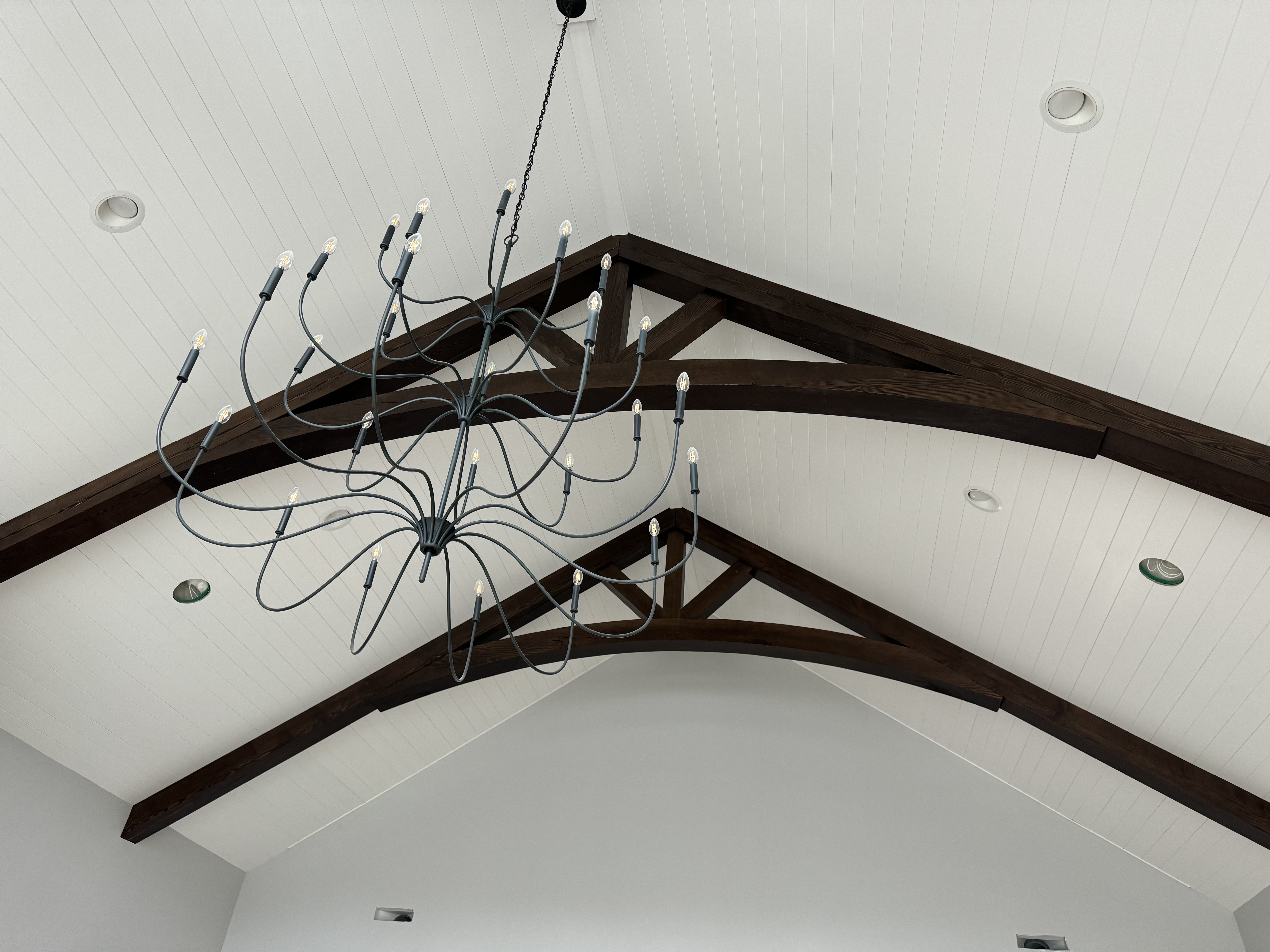
Many of the best PNW builds use both species strategically. A timber frame home might have:
- Douglas Fir for the structural frame, meaning posts, beams, and trusses
- Cedar for exterior siding, soffits, and exposed exterior trim
- Cedar for any exterior pergola or shade structure that will not be protected from rain
This combination plays to each species’ strengths and is often more cost effective than trying to use one species for everything.
When You Might Skip Cedar
A few cases where Western Red Cedar is not the best choice even for exterior use:
Ground contact. Cedar resists rot but is not immune. For posts in ground contact, pressure treated lumber or rot resistant alternatives such as white oak or locust are better.
Heavy structural loads. Anywhere a structural load needs to be carried, Douglas Fir or other denser species are better.
Tight budgets for unseen applications. If the wood will be hidden inside a wall or covered, paying cedar prices does not buy you anything.
Specifying Each at the Mill
When you order from us:
Douglas Fir is our standard offering. Sizes from 6x6 to 30x30, lengths to 60 feet, all WCLIB graded. Pricing runs on two volume tiers: $4.60 per board foot on orders under 4,000 BF, dropping to $3.60 per board foot at 4,000 BF and up. Size, length, and FOH surcharges stack on the base rate, and Select Structural adds 30 percent.
Western Red Cedar is available at market rate, quoted per project. We carry siding stock and can mill larger cedar timbers by request. Supply varies, and some cedar orders have longer lead times depending on what is moving through the supply chain.
For projects using both, we can quote them together so you see the full project cost.
Getting Help Choosing
If you are not sure which species is right for your application, tell us what you are building and what conditions the wood will be exposed to. We have been milling in Arlington since 1977 and can help you make the right call.
Last updated September 14, 2026