
Why Douglas Fir
Built for Joinery
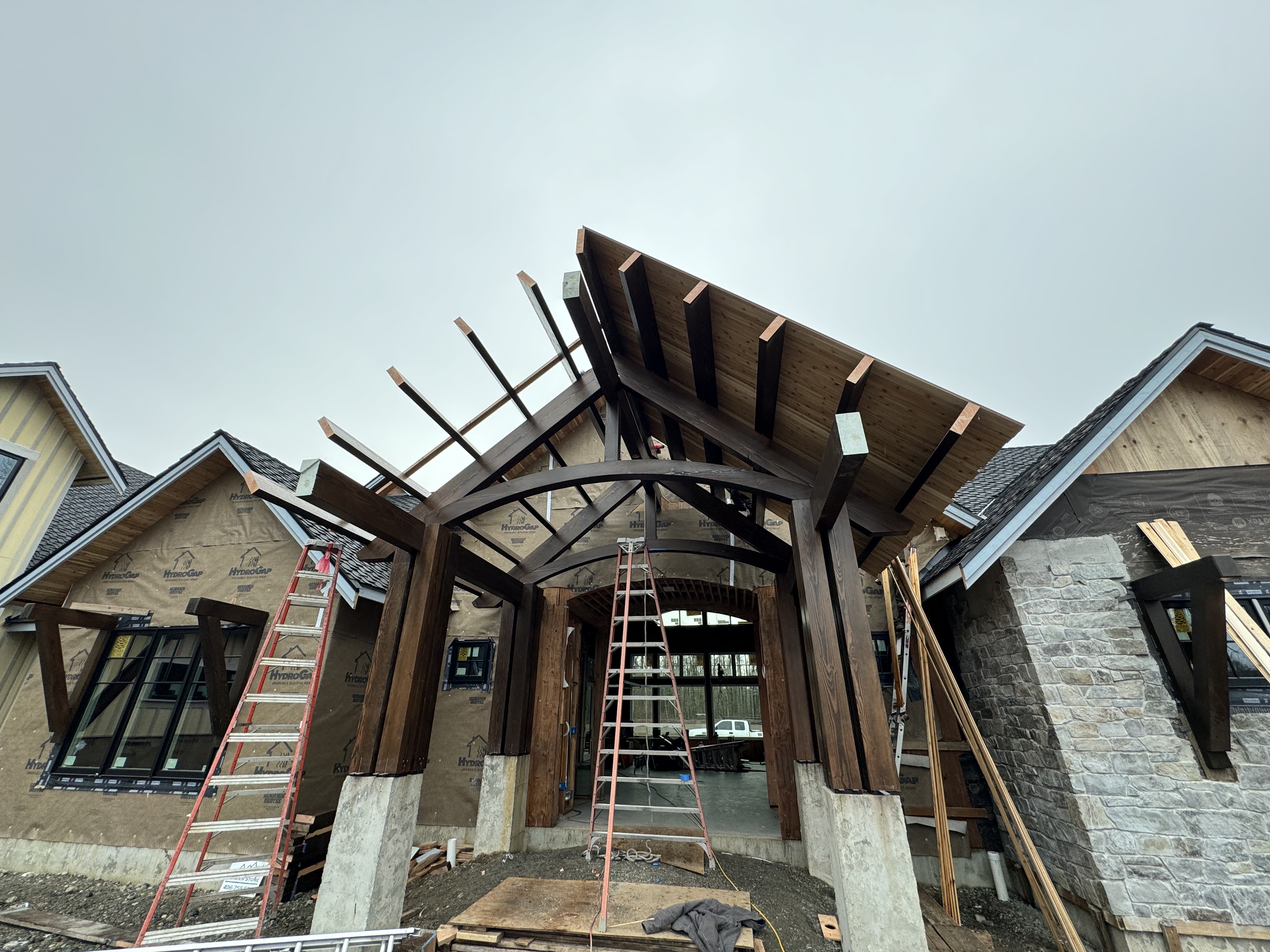
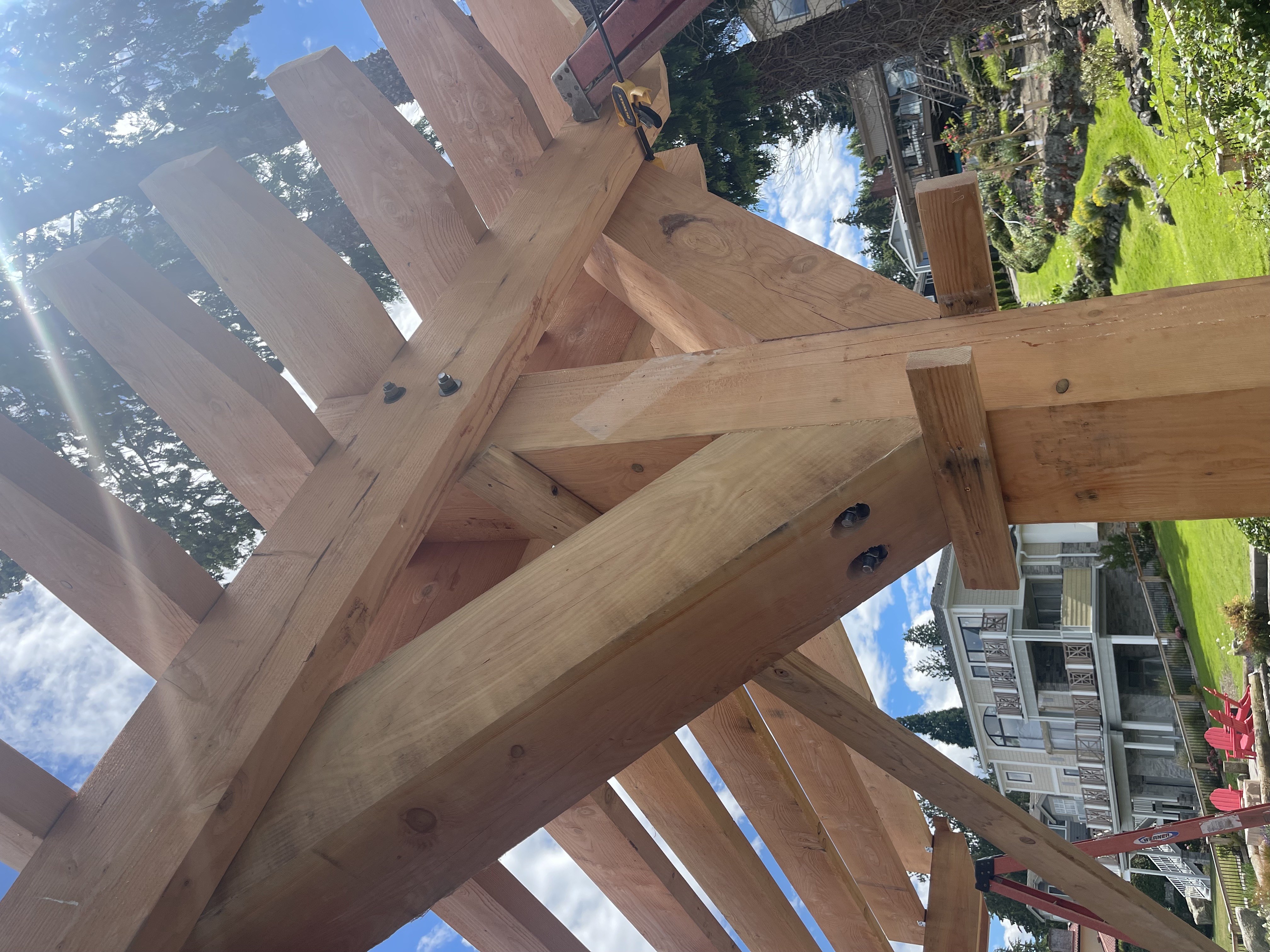
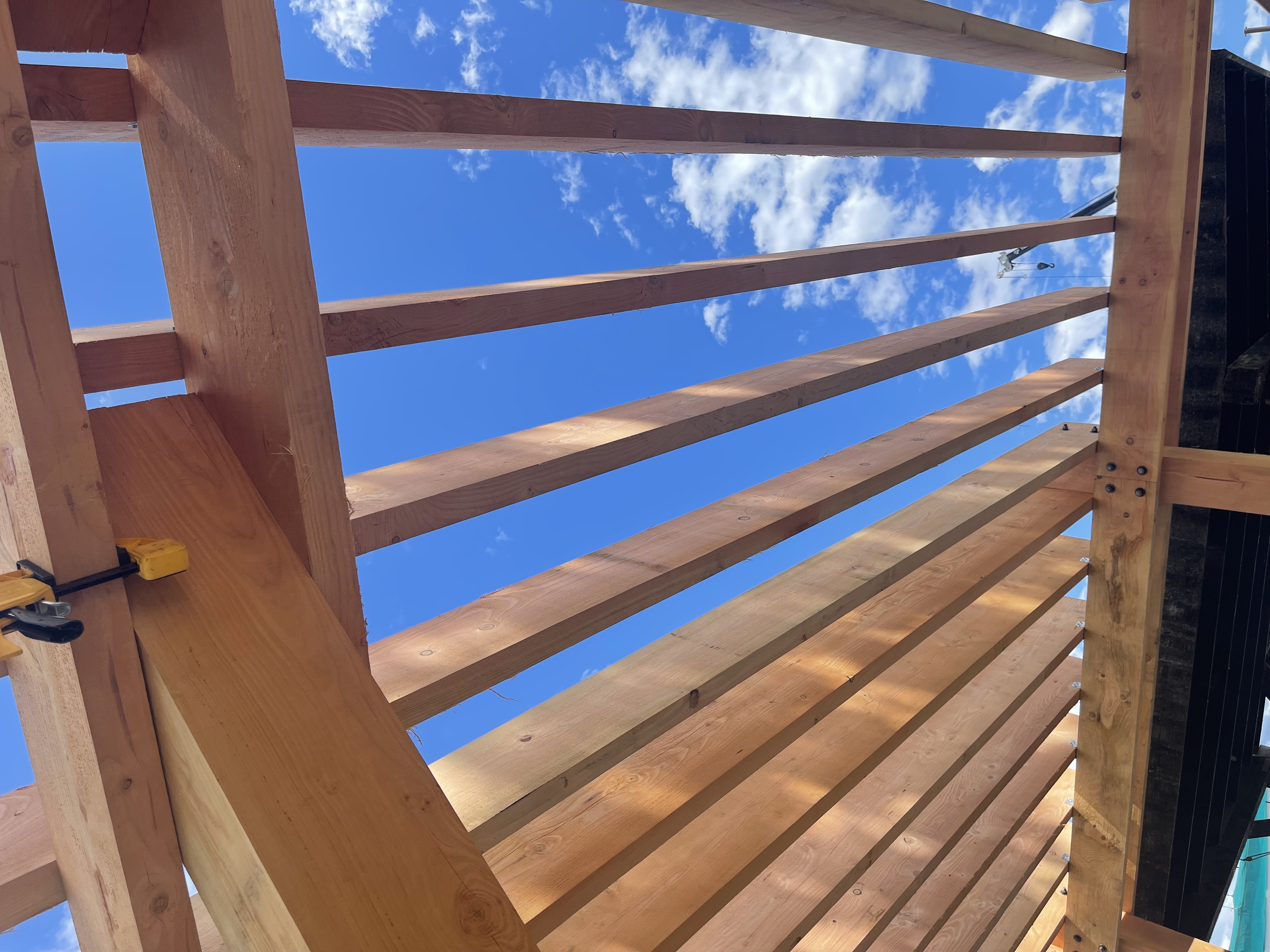
Timber framing asks three things of a species at once. Grain consistent enough to cut clean joinery, dimensions consistent enough that layout holds across a frame, and published design values an engineer will stamp. Coast Douglas Fir is one of the few that delivers all three at the sections this work needs.
The strength matters less than people assume and the predictability matters more. A frame is a system of joints, and a joint is only as good as the certainty that the piece it is cut into is the size the drawing says it is.
That is the argument for buying from a mill rather than a yard. We cut to order, so the sections arrive at the dimensions you laid out against, in the lengths your frame actually wants, rather than whatever a distributor happened to stock.
Dimensions
Full Nominal, Because Layout Depends On It
Dimensional lumber is sold nominal and delivered smaller. A 2x4 is one and a half by three and a half. Carry that convention into timber framing and the layout falls apart, because square rule and scribe rule both assume you know the real dimension of the stick in front of you.
We cut rough, at or very near full nominal. An 8x8 from us is close to eight inches by eight inches, not seven and a quarter. That is what lets a framer lay out from a reference face with confidence, and it is the difference between a frame that goes together and a frame that gets fettled on site.
If your frame is being cut by a CNC shop rather than by hand, tell us. Machine shops sometimes want S4S for repeatable work-holding, and that is a different order with different tolerances.
Sections
What Goes Where
| Size | Typical Role |
|---|---|
| 6x6 | Braces, light posts, porch framing |
| 8x8 | Posts in residential frames, smaller bents |
| 8x10 / 8x12 | Girts, plates, secondary beams |
| 10x10 | Primary posts in most timber frame homes |
| 10x12 / 12x12 | Principal beams, bent posts, ridge members |
| 12x16 / 14x14 | Long-span girders, heavy commercial frames |
| 16x16 and up | Monumental work, churches, lodges, pavilions |
We cut 6x6 through 30x30. Roles above are convention, not specification. Your engineer sets the sizes.
Sizing a Span?
Our load calculator works board feet, weights and span inputs for a given section, which is a useful sanity check while a frame is being drawn. It does not replace an engineer, and on a timber frame it should not try to.
Appearance
Exposed Frames Change the Order
Most timber frames are meant to be looked at. That is usually the reason somebody is building one, and it changes what is worth paying for.
Free of Heart Center is the specification that matters most for visible work. Excluding the pith from a member sharply reduces how much it checks and twists as it dries. We supply FOH to 12x12, free below 10x10 and $0.50 per board foot from 10x10 through 12x12. It is not available above 12x12, because a section that large cannot be cut free of heart from the logs it comes out of.
Checking will still happen, and it is worth setting that expectation with a client before the frame goes up rather than after. Checks along the face of a timber are a drying characteristic, not a structural defect. On an exposed frame most people come to like them. The ones who do not should be told early.
Grade is usually not where the money should go. Select Structural adds 30 percent across whatever it is applied to. On a frame where a handful of members are both prominent and highly stressed it can be worth it. Applied to the whole package it rarely is. More on this in WCLIB grading explained, and on movement in twist, splits and checks.