
Services
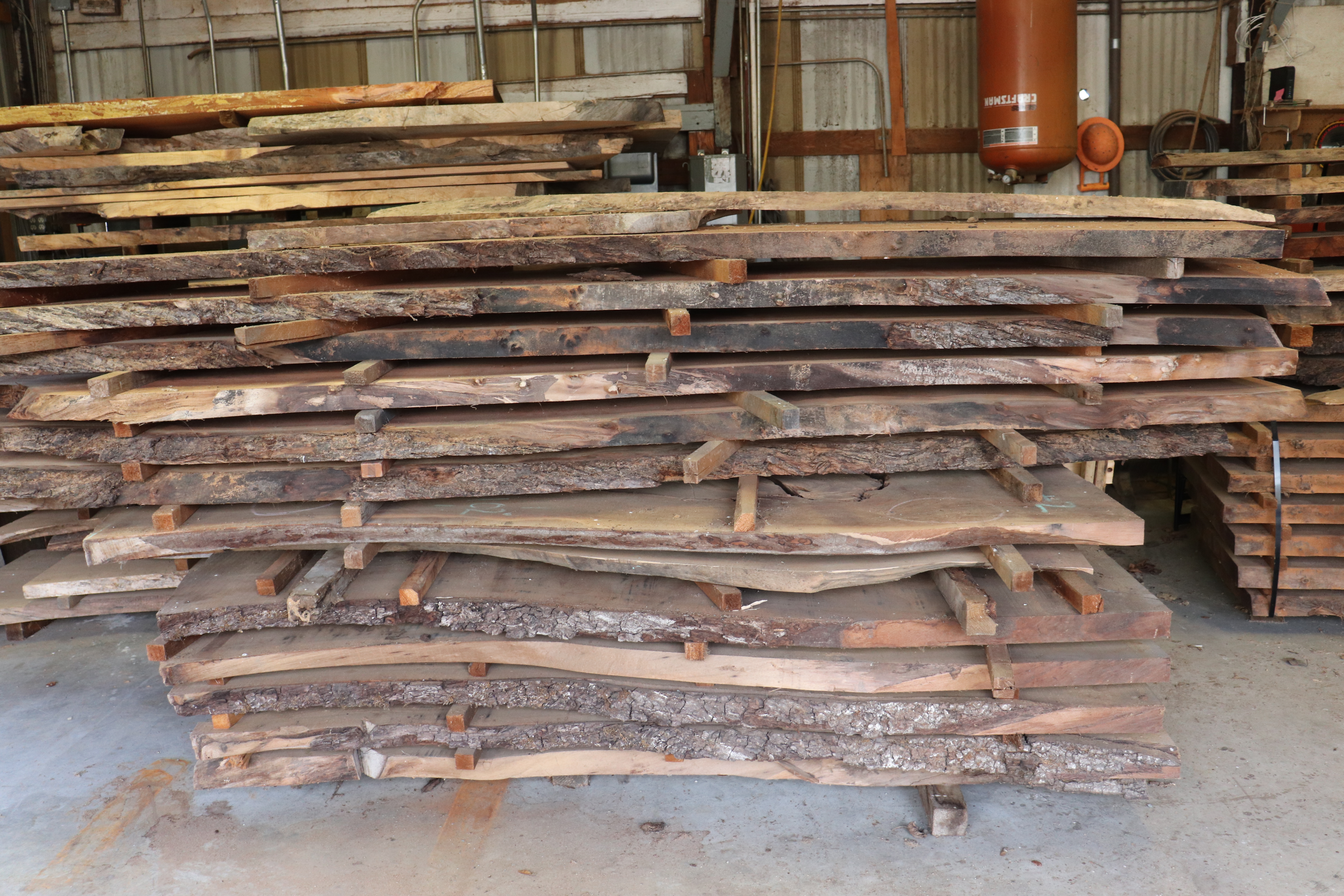
Live Edge Slabs
Pacific Northwest timber in its most natural form, cut thick and left wide.
Before You Order
You Are Buying a Piece, Not a Specification
Everything else we sell is made to a number. A slab is the opposite. It came out of one particular log and there is not another one like it.
That changes how to shop for it. Ordering a 10 ft walnut slab is not like ordering a 10 ft beam, because two slabs at the same dimensions can be completely different objects: where the sapwood runs, whether the edge waves or runs straight, how the crotch figures if it came off a fork, how much of the width is usable once you account for a split at one end. Length, width and thickness narrow the search. They do not finish it.
So the practical approach is to tell us the piece you are making and the dimensions it has to hit, rather than picking a slab off a list. Inventory moves, and the right answer is usually a slab we can point at rather than one we can describe.
Available Species
Three Woods, Three Jobs
All slabs are 3 inches thick, in lengths from 5 to 17 ft and widths from 24 to 44 inches. Pricing is per board foot, which on a slab means the price scales with the area you are taking, not with how impressive it looks.
Douglas Fir
$8/bfAppearance
Warm honey to amber, straight grain
Common Uses
Rustic tables, benches, shelving, mantels
Worth Knowing
The softest of the three, so it dents. That reads as character on a mantel and as damage on a desk.
Maple
$16/bfAppearance
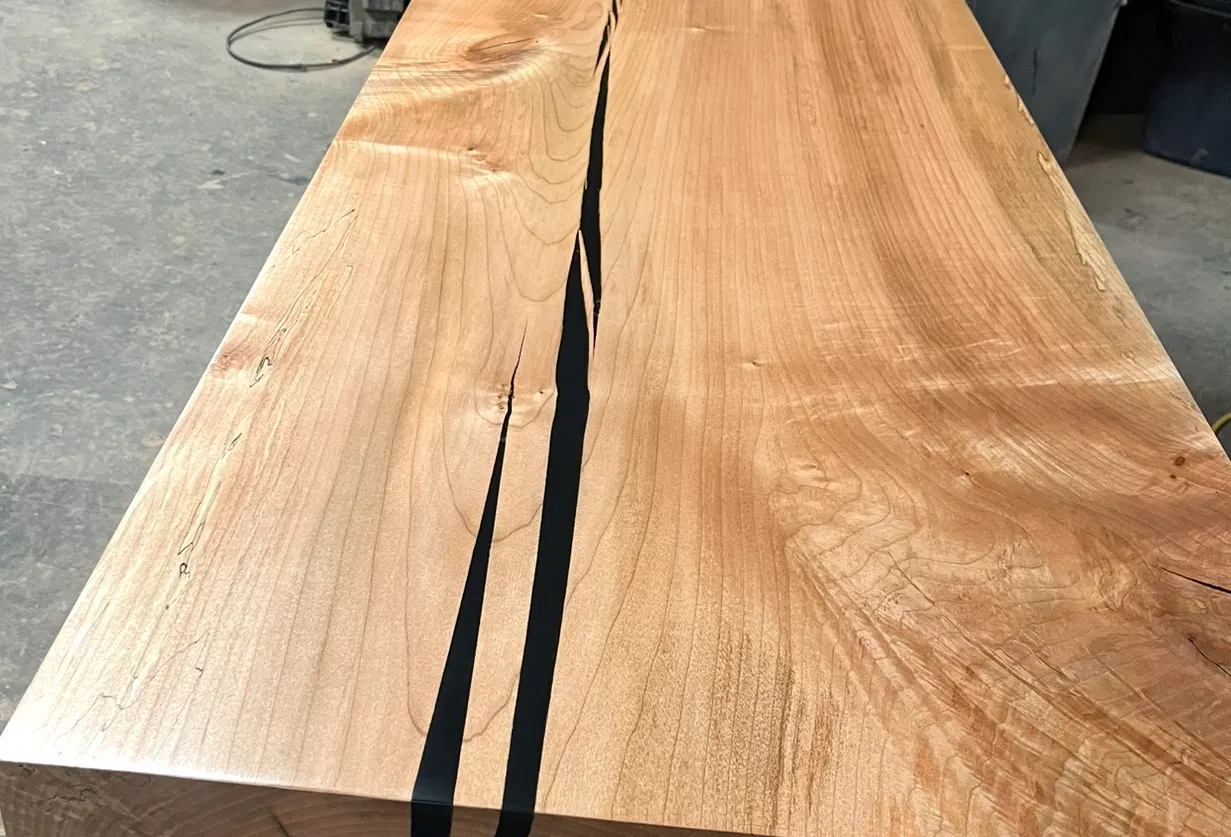
Light creamy tones, occasional figure
Common Uses
Conference tables, kitchen islands, countertops
Worth Knowing
Hard, pale and close grained. Takes a clear finish without going orange, which is why it ends up in kitchens.
Black Walnut
$28/bfAppearance
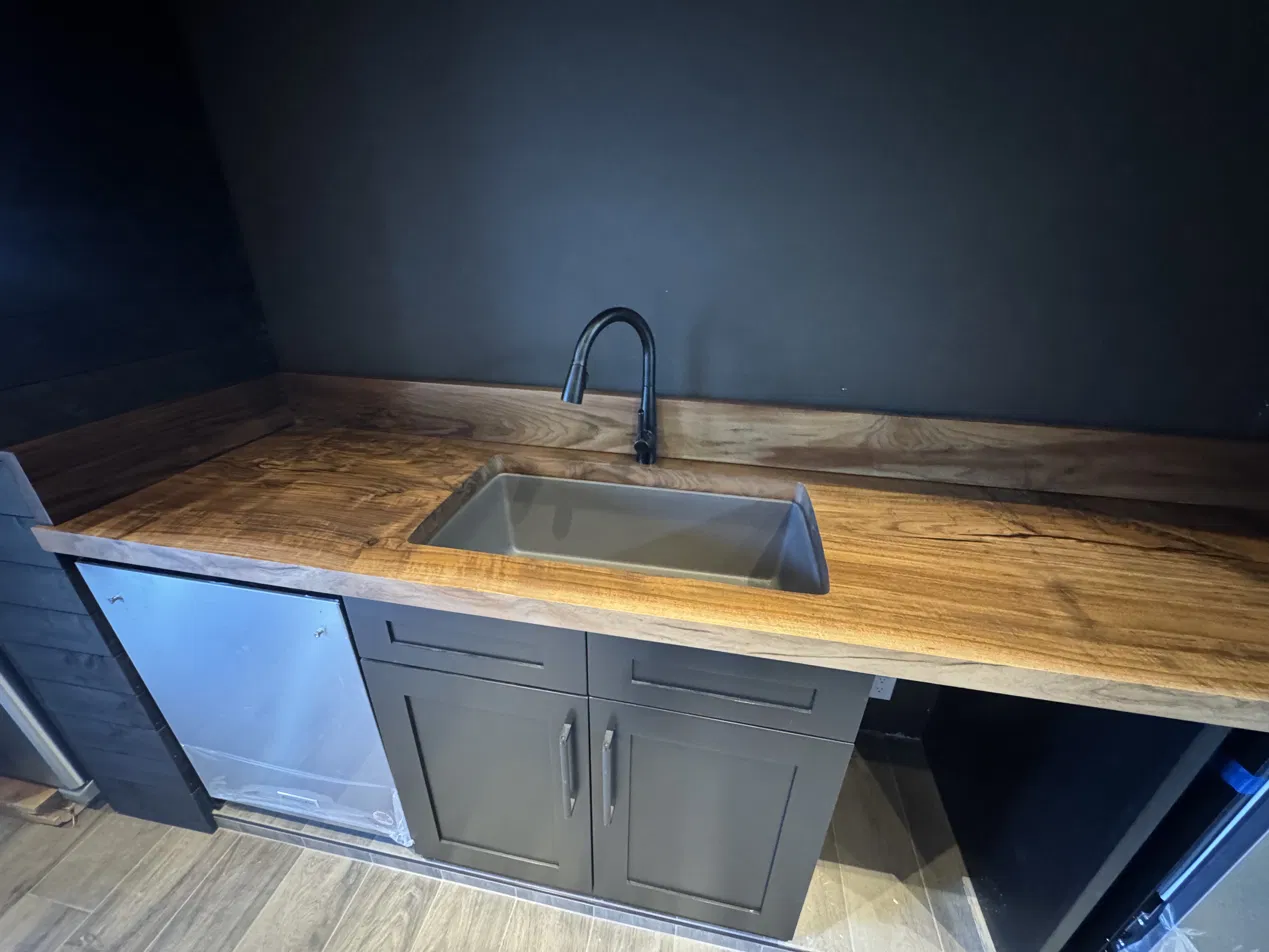
Deep chocolate to purple-brown
Common Uses
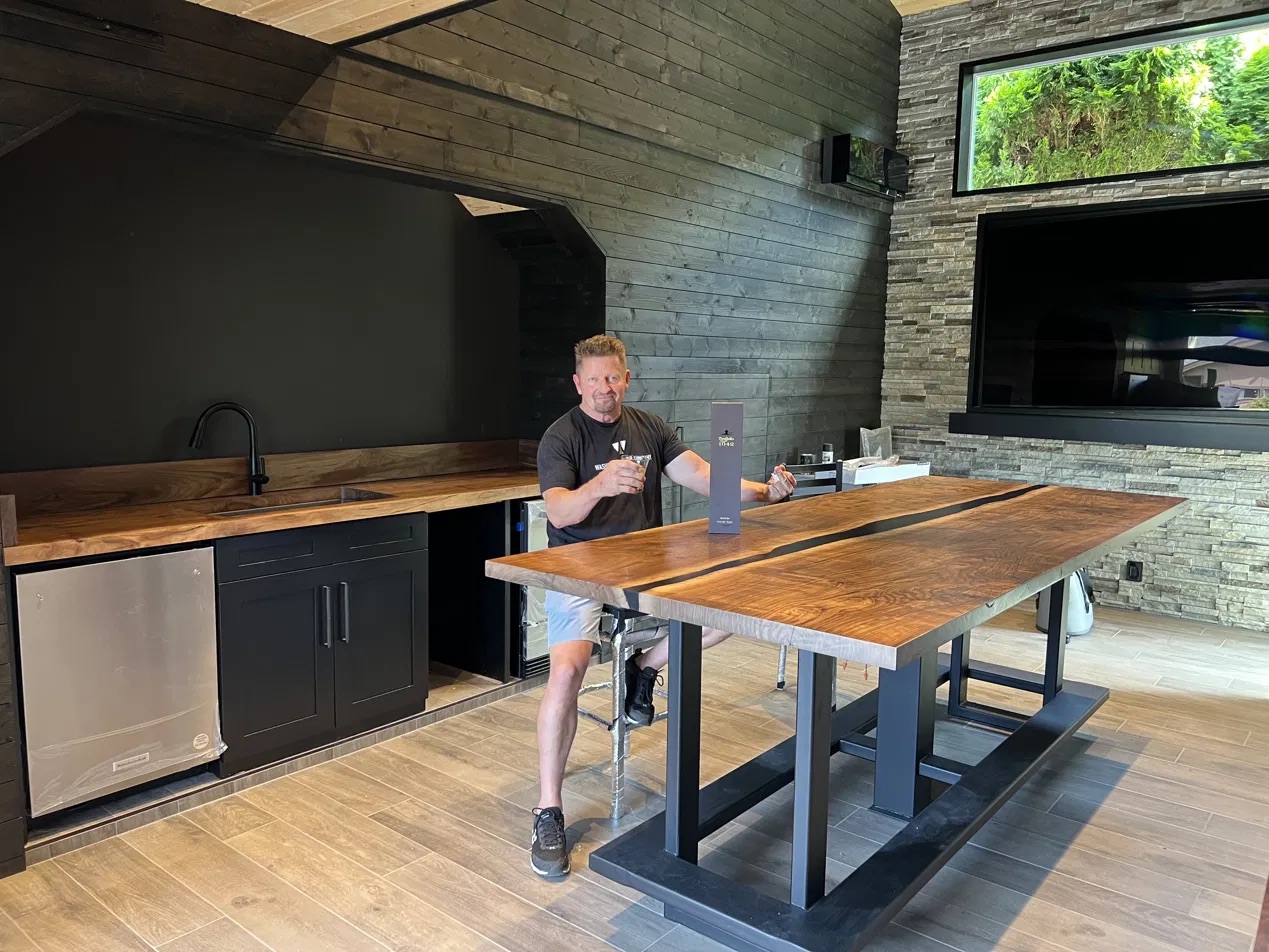
Premium bar tops, executive desks, showpiece tables
Worth Knowing
The one people picture when they say live edge. Priced accordingly, and worth it where the slab is the whole room.
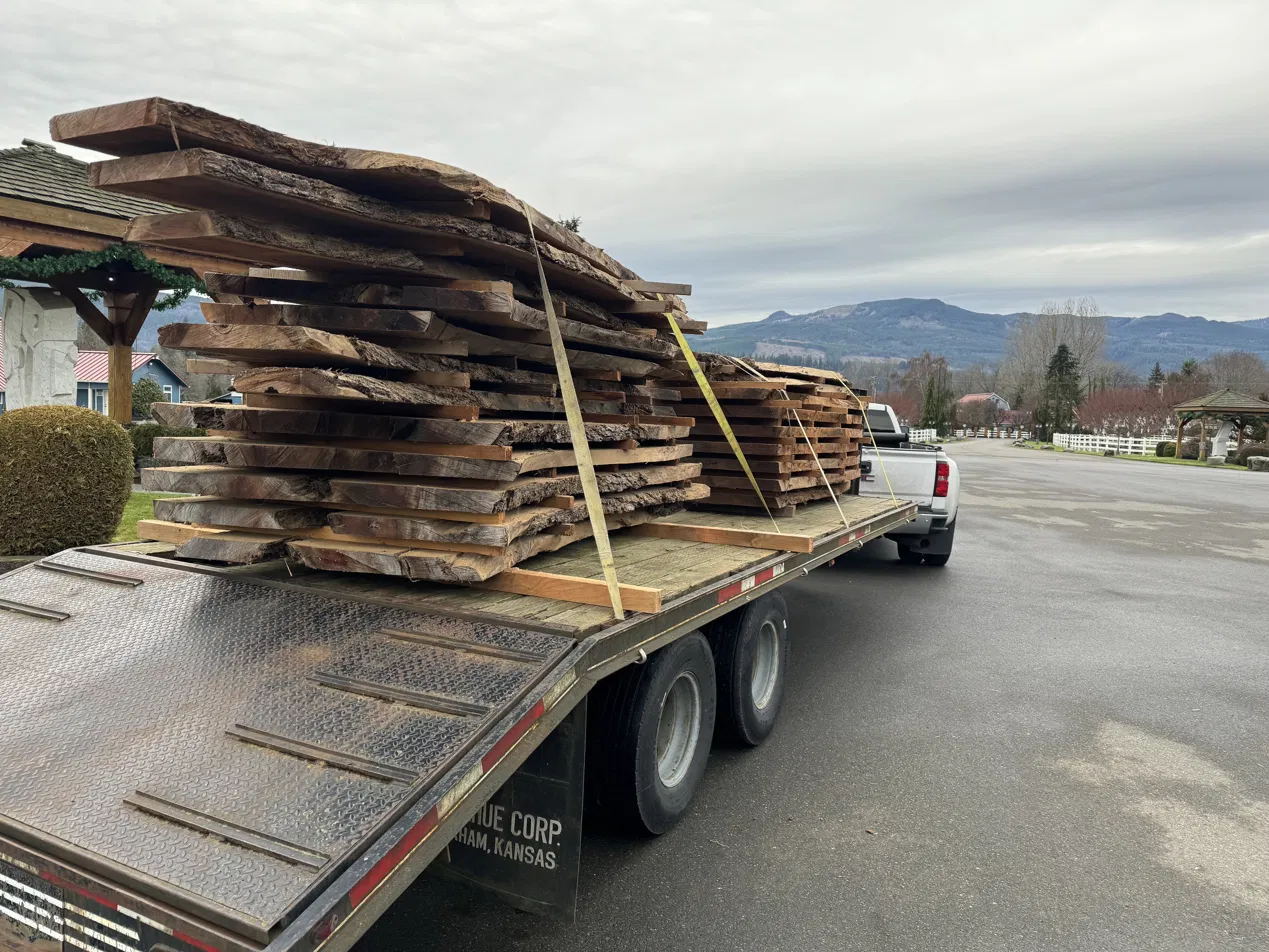
Slabs are the smallest thing that leaves this mill. If the project is structural rather than furniture, start at lumber and milling, where the same logs come out as posts and beams from 6x6 to 30x30.