
Services
Lumber & Milling
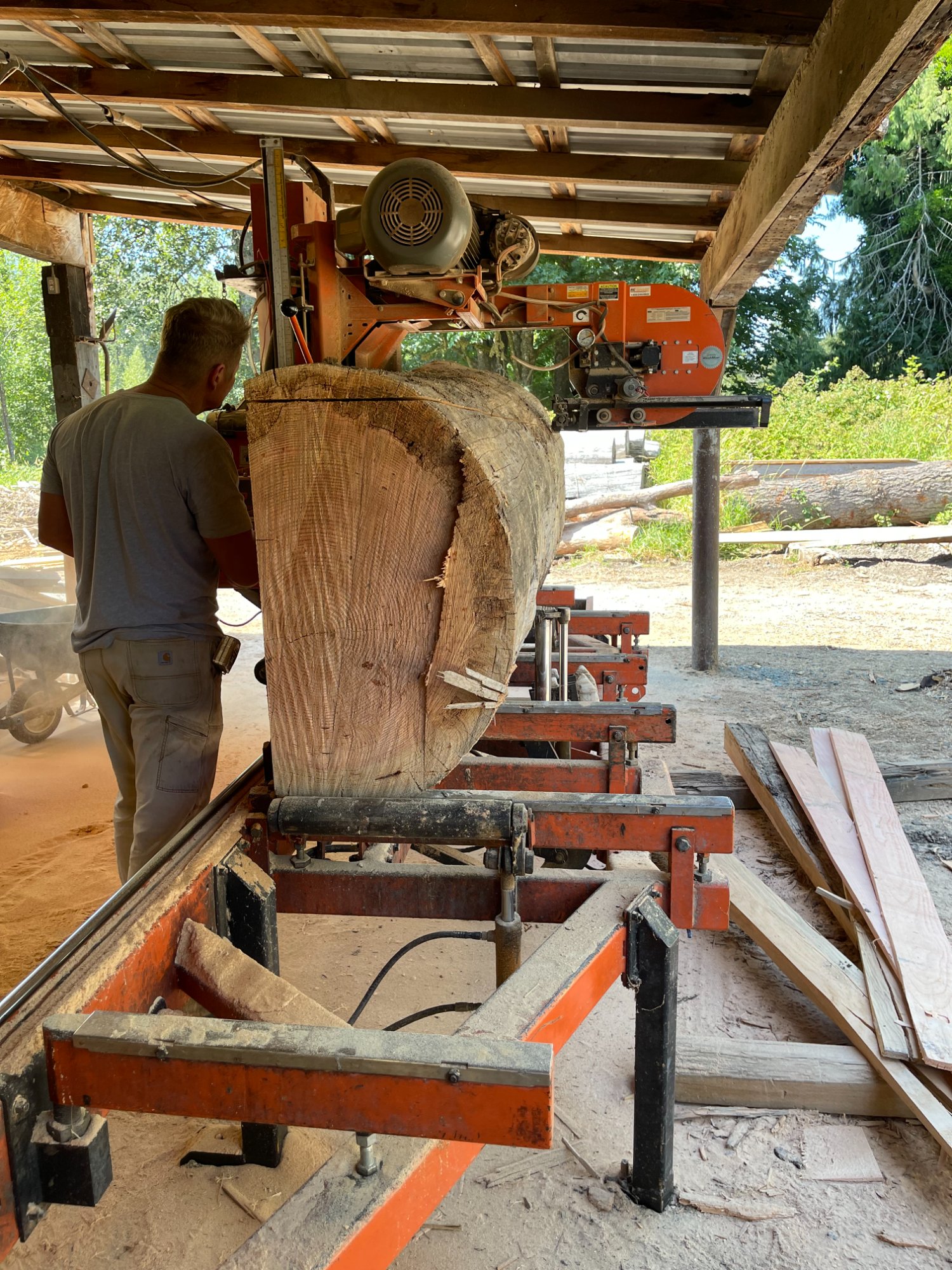
Oversized structural Douglas Fir, cut to your dimensions at our Arlington mill.
Custom Milling
Cut to Your List, Not Off a Rack
Bring us a beam schedule, a set of plans, or a list scrawled on the back of something. If it can be drawn, we can cut it.
Washington Timber Company is a mill, not a yard with a timber aisle. Nothing here is pulled from a stack of pre-cut stock and sold on at a markup. Your sections and lengths get cut for your job, which is why there is no minimum order and why a single ridge beam is as welcome as a full framing package. The practical difference between the two routes is set out in buying mill direct versus through a lumber yard.
What we cut is nearly all Douglas Fir, in sections from 6x6 up to 30x30 and lengths to 60 ft. If you already know what you need, the configurator prices a cut list in a couple of minutes.
Request a Quote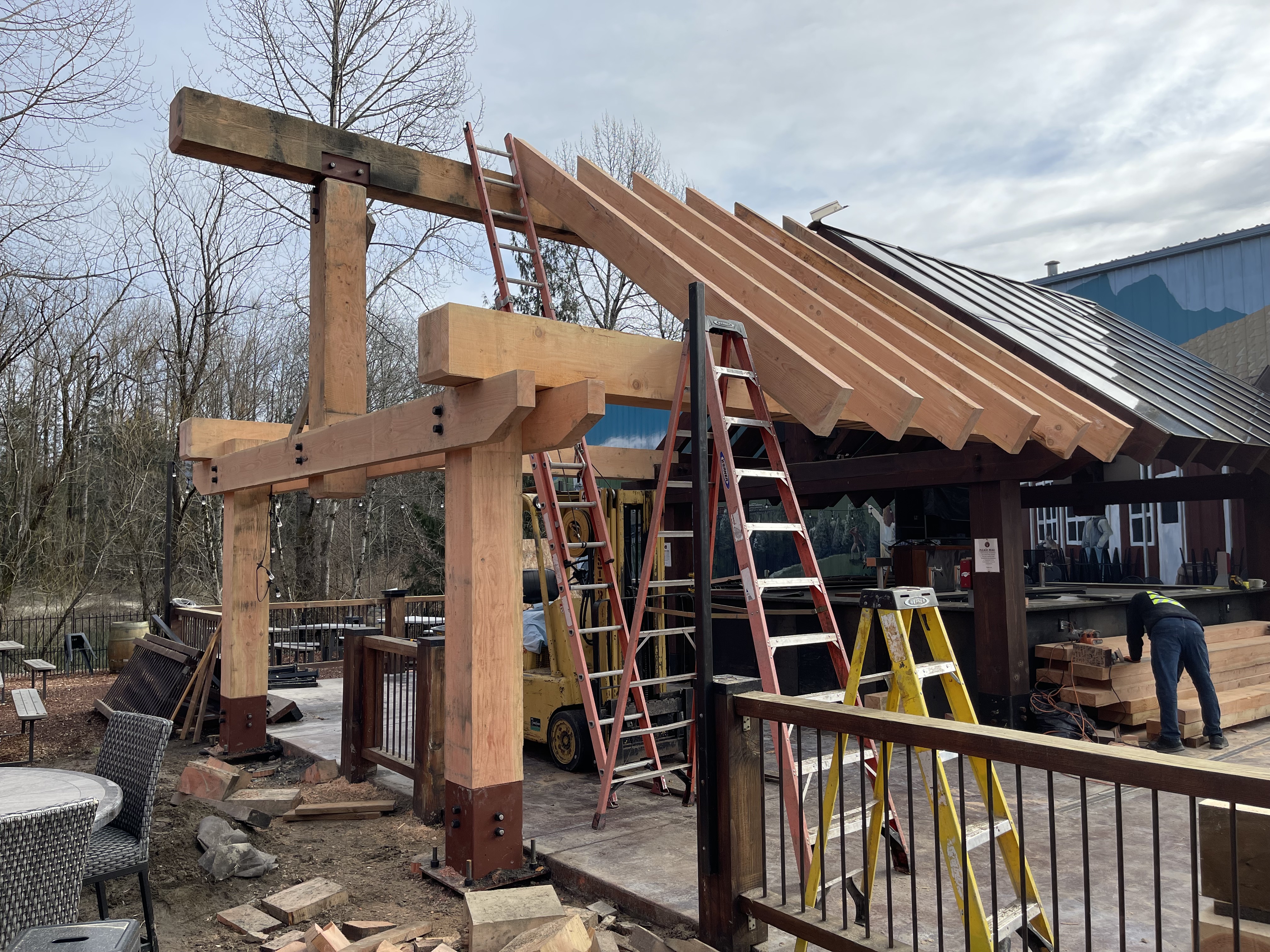
What Arrives on Site
We Ship Green, and That Is Deliberate
Heavy timber is not kiln dried, and anyone offering to kiln dry a 12x12 for you is describing something that does not really work. A kiln dries from the outside in. On a large section the surface reaches equilibrium long before the core does, and the stress between the two is what splits timbers rather than seasons them. The full version of that argument is in why large timbers are not kiln dried.
So the timber arrives green, at roughly 42 lb per cubic foot, and it dries in place over the first couple of years. It will shrink a little, and it will check on the face. Checking is a surface separation along the grain and in almost every case it is cosmetic rather than structural, which is the distinction twist, splits and checks in solid sawn Douglas Fir is written to make. Knowing it is coming is most of what makes it acceptable when it shows up.
The one choice that changes how much a timber moves is Free of Heart Center, abbreviated FOHC, where the pith is excluded from the section. It costs nothing under 10x10 and $0.50 per board foot from 10x10 through 12x12. Above that it is not available, because the log dictates a boxed heart at those sizes. On exposed work it is usually worth asking for.
Grading
Graded Because the Engineer Needs a Number
A grade is not a quality rating. It is a set of published design values an engineer can calculate against, which is why a permitted project needs one and a garden pergola generally does not. We grade under WCLIB rules and the grading is included rather than billed as an extra. WCLIB grading explained for structural timber covers what the rules actually measure.
We mill Select Structural and No. 1. Select Structural carries the highest design values and the tightest knots, and adds 30 percent to the stacked rate. No. 1 is the standard structural grade, prices at the base rate, and is what most orders use. Ungraded appearance material is available where nothing is being calculated. The design values for each grade are tabulated on the specifications page, alongside the wet service factors that apply to green timber.
Grade stamps are available on request, which matters on commercial and permitted work where an inspector wants to see one on the member rather than on a certificate.
Pricing
The Five Things That Move the Number
Rates stack. A rough cut timber starts at a base rate per board foot and picks up surcharges for section, length, heart center and grade. Board feet are width in inches times depth in inches times length in feet, divided by 12.
The base rate is $4.60 per board foot. At 4,000 BF, roughly a truckload, it drops to $3.60. That is the largest single lever on any order.
Up to 12x12 costs nothing extra. From 13x13 through 24x24 adds $1.00 per board foot, and 24x30 and 30x30 add $2.00.
Anything up to 20 ft is standard. 21 to 30 ft adds $1.00 per board foot, 31 to 40 ft adds $2.00, and 41 to 60 ft adds $3.00.
No charge below 10x10, $0.50 per board foot from 10x10 through 12x12, and not available above that, because at those sizes the log itself dictates a boxed heart.
WCLIB grading is included. Select Structural adds 30 percent to the stacked rate. No. 1 prices at the base rate.
The cheapest order is a truckload of standard sections in standard lengths at No. 1. The most expensive is a handful of oversized long members in Select Structural. Most real jobs sit between the two, and the configurator will tell you where yours lands before you talk to anyone. For how the rates got where they are, see Douglas Fir timber pricing in 2026.
Standard Sizes
Rough Cut Timber Dimensions
Sections from 6x6 through 30x30, standard lengths 8 to 20 ft, custom lengths to 60 ft on request. Rough cut Douglas Fir starts at $4.60 per board foot and drops to $3.60 at 4,000 BF.
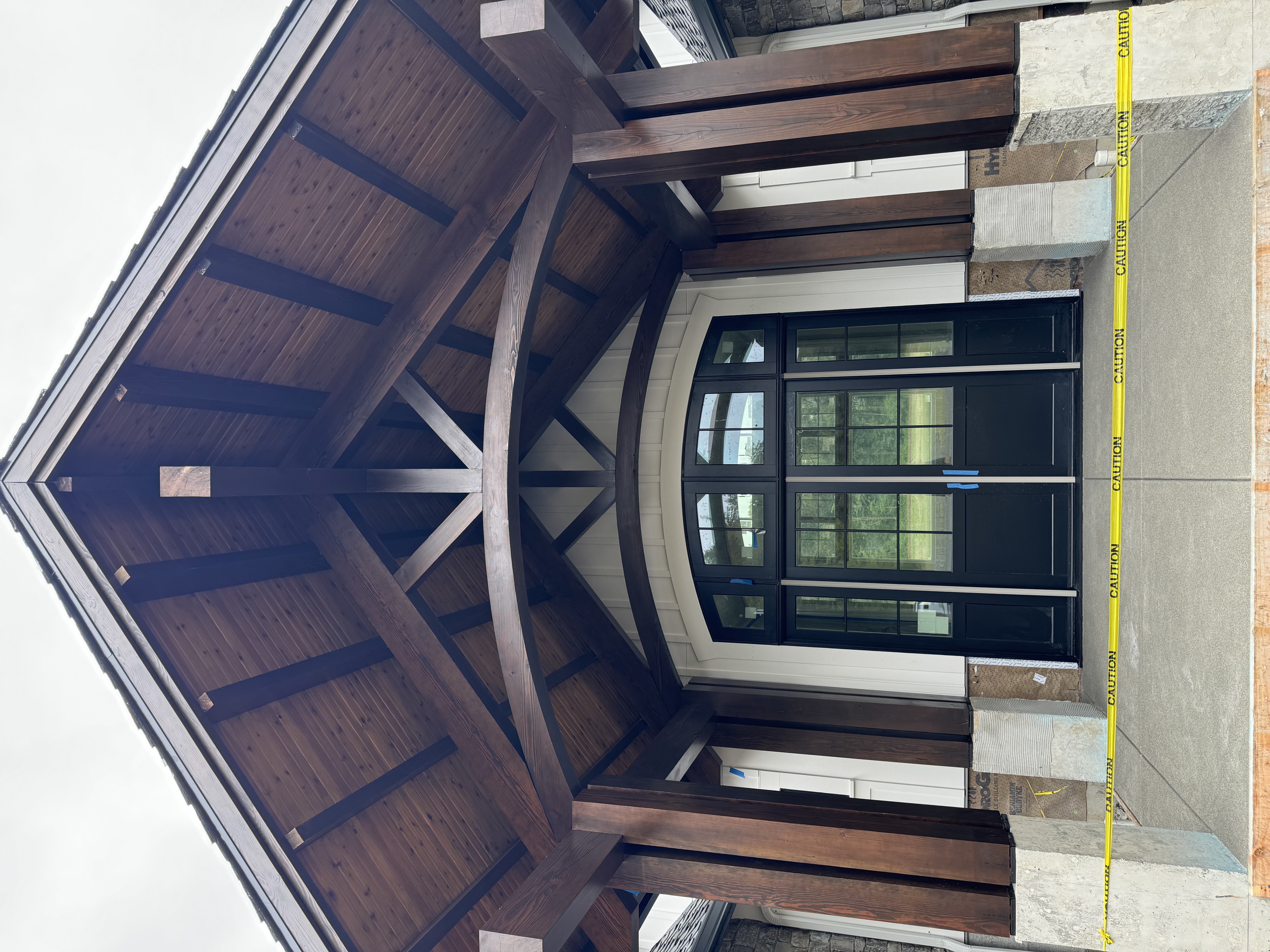
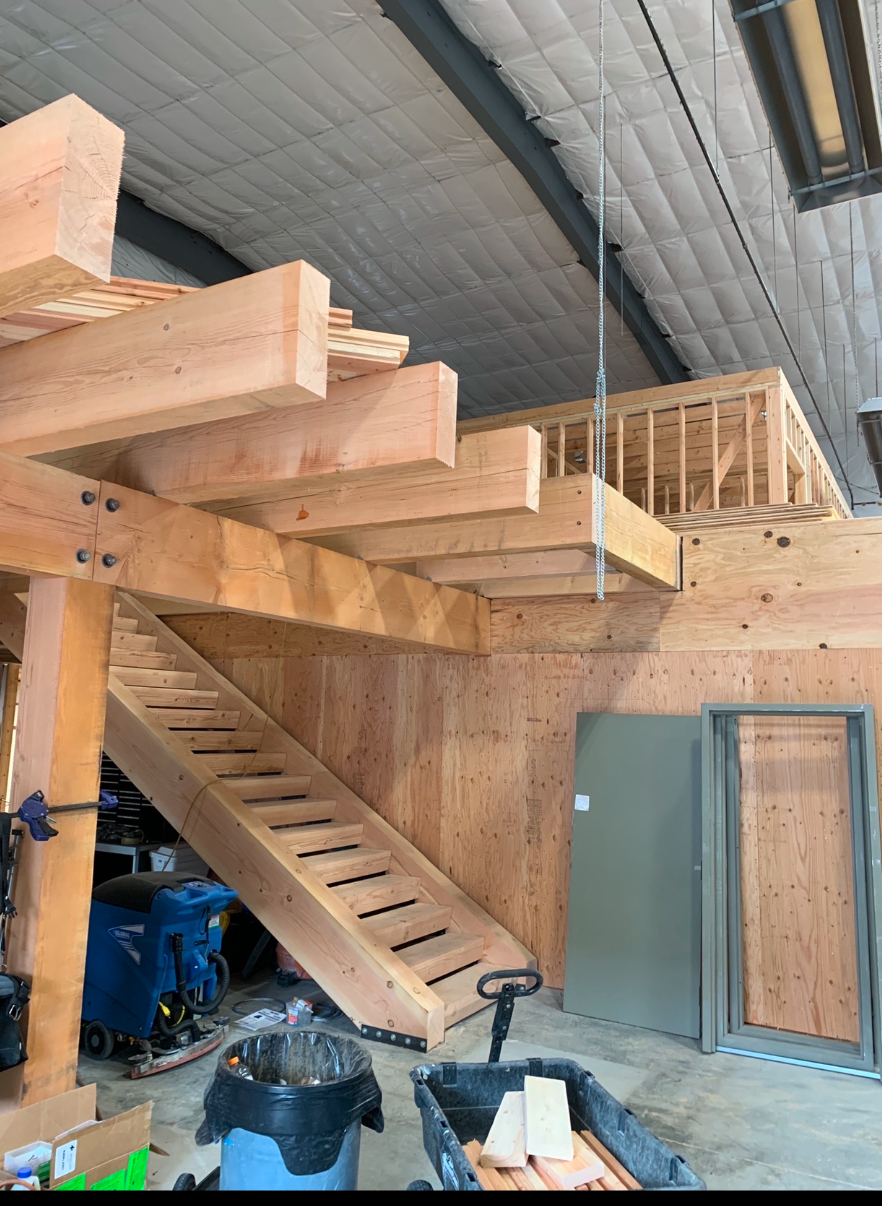
If the timber is going into a frame rather than a stack, we can take the work further than a cut list. A build kit arrives with the joinery cut and the hardware specified, and timber frame work is the application most of our long members end up in.